CEA in 2025: Win, Lose, or Draw?
 December 15, 2025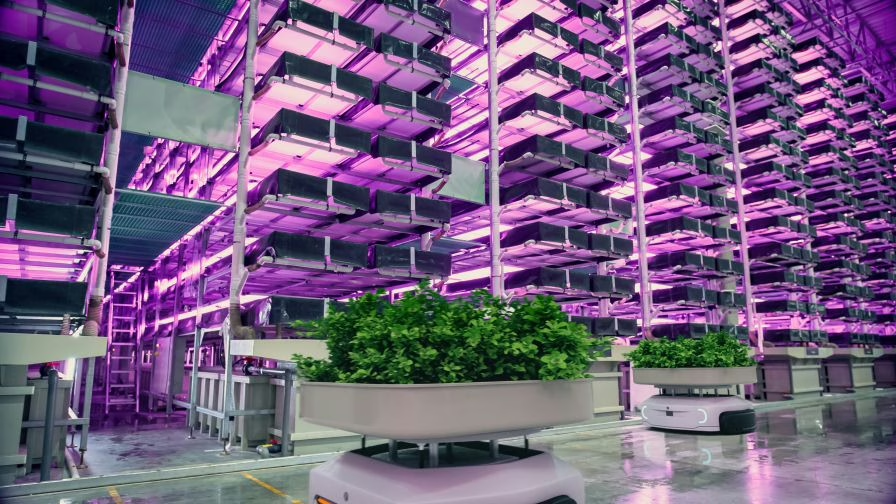
Indoor vertical farm. | Photo courtesy of Adobe Stock
Over the past 12 months, CEA produce operations in North America have weathered many ups, downs, and surprises. Here’s a look back at some of the biggest news stories and what they signal for the industry going forward.
Global and Domestic Forces
Tariffs Create Turmoil
In early 2025, volatile Trump administration tariff policies disrupted North American CEA operations. A 25% Canadian tariff was imposed, briefly paused after three days (costing Ontario growers $6 million, according to Ontario Greenhouse Vegetable Growers’ executive director, Richard Lee), and was then followed by steel/aluminum and global baseline tariffs. The measures impacted critical inputs—peat moss, potash fertilizers (Canada supplies 85% of U.S. imports), seeds, and equipment—increasing costs for U.S. growers and greenhouse structure manufacturers. U.S. operations faced higher capital expenditures for facility expansion and potential supply chain disruptions.
Looking ahead: Uncertainly continues for 2026, as unpredictable tariff policies make long-term planning difficult. Canadian growers may increasingly redirect produce away from U.S. markets if tariffs persist, potentially causing supply disruptions and price spikes for American consumers while discouraging cross-border infrastructure investments that have historically strengthened the integrated North American CEA ecosystem.
U.S. Withdraws from 2019 Tomato Suspension Agreement
The U.S. withdrawal from the 2019 tomato suspension agreement, effective July 14, 2025, imposes approximately 21% antidumping duties on Mexican tomato imports. The policy has had mixed reactions across the agriculture industry: Florida field growers pushed for termination, while the CEA Alliance expressed disappointment. Mexican imports account for 88% of greenhouse tomatoes in the U.S., but many operations are owned by U.S. and Canadian companies with cross-border greenhouse networks. The tariffs create winner-loser dynamics even within individual companies’ operations, as North American firms may produce in multiple countries including Mexico.
Looking ahead: Companies with U.S.-only operations gain competitive advantage, while integrated North American producers face complex decisions about moving production northward versus absorbing tariff costs on Mexican operations.


Shifting Farm Labor Policies
In 2025, U.S. farm labor policy has been in flux, with H-2A at the center of the storm. Federal agencies introduced new wage rules and worker-protection measures, some of which were quickly challenged in court, creating confusion for employers heading into peak planting and harvest seasons. Growers have leaned more heavily on H-2A than ever before, but rising program costs and legal uncertainty are squeezing margins. For North American CEA operators, shifting rules on wages and worker protections add pressure to already tight budgets and make workforce planning more complicated than ever.
Looking ahead: Policy volatility is likely to continue. Larger CEA producers may adapt through compliance teams and automation, while smaller operators could feel the strain of higher costs and fewer labor options.
Substrate Shortages Grow Worldwide
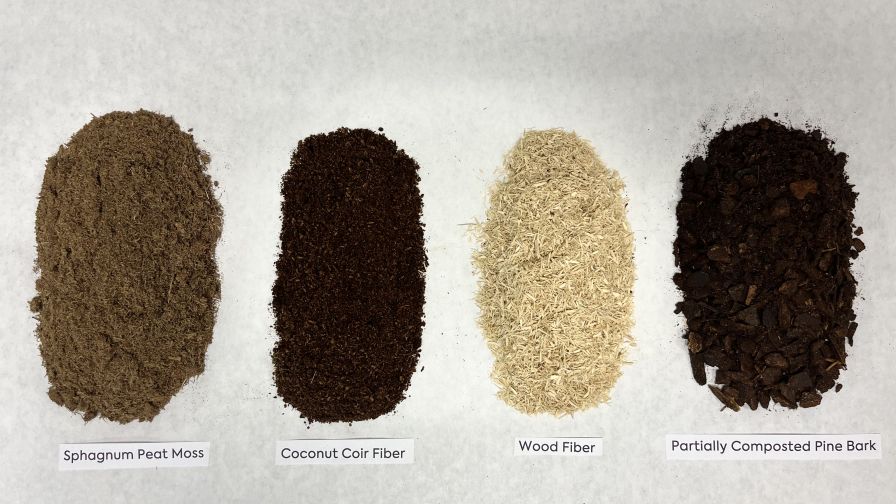
In Fall 2025, CEA growers were alerted to significant substrate shortages due to global supply chain disruptions. Heavy rainfall in key peat-producing regions, such as the Baltic States, Finland, and Sweden, led to a 75–85% reduction in peat harvests, with white sphagnum peat production falling to just 25–35% of normal levels. Simultaneously, irregular weather patterns in tropical zones affected coco coir supply, causing further strain on substrate availability. These shortages resulted in increased prices and limited access to essential growing media, prompting CEA growers to seek alternative substrates and adjust production strategies to mitigate the impact on crop yields and operational costs.
Looking ahead: Expect continued pressure on substrate availability and rising costs due to ongoing supply constraints from key peat and coco coir regions. This will likely accelerate the adoption of alternative growing media and innovations in substrate recycling.
“In Canada, national attention is shifting toward food sovereignty. Investments in CEA—particularly vertical and greenhouse farms—are being championed not just for innovation, but as infrastructure critical to food security.”
–Vonnie Estes, International Fresh Produce Association
Vertical Farming Shakeout
Bowery Farming Ceases Operations
In November 2024, Bowery Farming abruptly shut down operations, laying off hundreds and abandoning expansion plans after failing to secure new capital. Once valued at more than $2 billion, the vertical farming giant was undone by high energy and labor costs, operational challenges (including a widespread phytophthora outbreak), and overambitious scaling fueled by venture funding and debt. The closure shocked many in the industry, but it followed a string of high-profile U.S. CEA shutdowns, highlighting deeper structural challenges across the sector.
Plenty Files for Bankruptcy, Returns Two Months Later
In March 2025, Plenty Unlimited filed for Chapter 11 bankruptcy, citing fundraising challenges despite nearly $1 billion in prior venture capital backing. This was after launching a vertical strawberry farm in Richmond, Va., in partnership with Driscoll’s in September 2024, and then shutting down its leafy-greens operation in Compton, Calif., in December. By late May 2025, Plenty emerged from restructuring under a slimmer business model focused solely on strawberry production at its Virginia facility and continued R&D in Wyoming.
Freight Farms Shutters, Growcer Picks up Assets
Boston-based container farming company Freight Farms ceased all operations at the end of April and filed for Chapter 7 bankruptcy after 13 years in business. The shutdown followed a period of financial strain that included layoffs and a scrapped merger, leaving hundreds of growers without access to support services, software, or parts. In July, Ottawa-based Growcer won the bid to acquire all of Freight Farms’ assets. Growcer, which builds similar modular vertical farms in shipping containers, committed to providing seamless transition support for existing Freight Farms customers across all 50 U.S. states and multiple countries worldwide.
80 Acres Farms Grows Through Acquisition
80 Acres Farms made news several times in 2025, beginning in February when it announced it had raised $115 million in investment capital during 2024. At that time, the Hamilton, Ohio-based vertical farm also acquired Plantae Biosciences, an Israeli biotechnology company specializing in accelerated plant breeding technology. In March, it acquired three indoor vertical farms previously owned by bankrupt Kalera, located in Georgia, Texas, and Colorado. And in August it merged with Soli Organic, setting the stage for it to become one of the world’s largest indoor ag companies.
Eden Green Closes Doors
Eden Green Technology announced that it would shut down its two Cleburne, Texas, greenhouses on December 13, 2025, cutting 102 jobs. CEO Eddy Badrina confirmed the permanent closure of the vertical farm. The move follows a $40 million expansion announced less than two years ago to boost production and regional employment.
Looking ahead: Recent vertical farming bankruptcies and closures highlight the limits of overexpansion and underperforming business models. Survival increasingly depends on strategic acquisitions, operational focus, and aligning innovation with long-term profitability.
“One of our corporate values is, ‘Fail fast, cheaply, and with tremendous insight.’ Once we figured out what worked, then we built slightly larger systems, and then started thinking about how to scale it.”
–Mike Zelkind, 80 Acres Farms
Greenhouse Growth
Cox Farms Takes the N.A. Crown
Over the past year, Cox Farms has rapidly ascended to become North America’s largest indoor farming operation, with more than 700 acres of greenhouse production. In late 2024, the company significantly expanded its footprint by acquiring Greenhill Produce’s 150-acre Ontario facility through its subsidiary Mucci Farms. Around the same time, BrightFarms—another Cox brand—opened an advanced 8-acre greenhouse in Macon, Ga., with plans to scale it by an additional 24 acres.
Vegpro Expands from Field into Greenhouse
Vegpro International, a major Canadian field lettuce producer available in more than 2,500 retail locations, invested $135 million to build one of Canada’s largest greenhouses in Sherrington, Quebec. The 12.8-acre facility officially opened in May, producing premium lettuce varieties under the brand name Folia as a complement to the company’s core business of field-grown greens and other vegetables. CEO Anthony Fantin says Vegpro is looking to build more greenhouses in regions where it already has a field base.
U.K.’s Oasthouse Ventures Launches Greenhouse Business in U.S.
Oasthouse Ventures Ltd. of the U.K. is progressing with its $104.8 million, 65-acre greenhouse project in Carroll County, Va., branded as Pluck’d. Construction commenced in May 2025 and is expected to begin tomato production by March 2026. This facility will produce more than 45 million pounds of tomatoes annually for distribution across the Northeast, Southeast, and Midwest.
Looking ahead: Greenhouse sector growth is being driven by large-scale expansions, diversification from traditional farming, and increased international investment. Success will depend on blending regional expertise, technological innovation, and strategic partnerships to deliver sustainable, year-round produce efficiently.
“While the field is the more romantic idea of farming—preparing the land, seeding, taking care of the crop—the greenhouse is more like a factory of lettuce. And we need to be as efficient as a factory.”
–Anthony Fantin, Vegpro
Editor’s note: This article was originally published in our 2025 Industry Report: State of the CEA Industry. Click the link to access the full report for free.