Lessons from the Front Lines: What Growers Wish They Knew Sooner
 December 4, 2025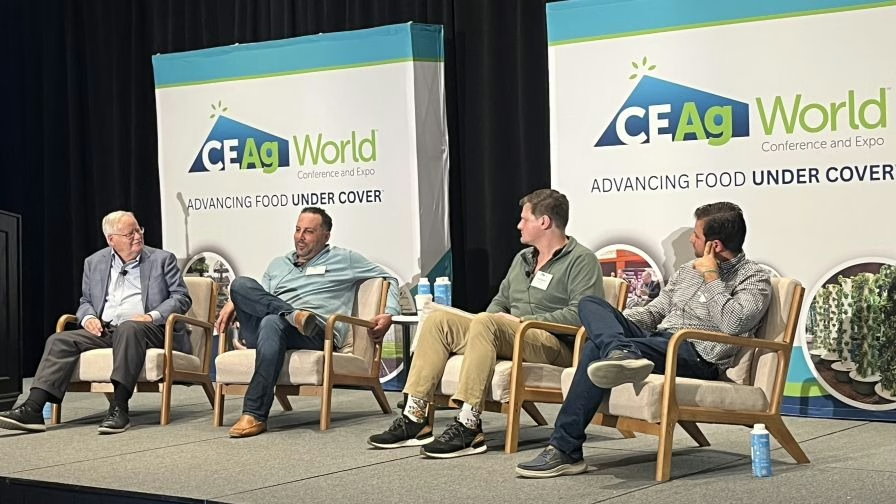
(Left to right) Grower Panel with Tom Stenzel, Billy Augustine, Alex Rudnicki, and Renato Zardo. | CEAg World
At the 2025 CEAg World Conference and Expo, the second keynote on Day 1 brought together three leaders representing the diversity of today’s CEA landscape:
- Renato Zardo, Director of Growing, Great Lakes Growers
- Alex Rudnicki, Vice President of Technology Development, AeroFarms
- Billy Augustine, owner/President, All American Produce Co.
“Lessons from the Front Lines: What Growers Wish They Knew Sooner” was moderated by Tom Stenzel, Executive Director of the CEA Alliance, and the session delivered a candid look at commercial growers’ setbacks and triumphs, covering trial-and-error learning, facility design, automation, propagation, economics, and the daily realities of growing under cover.
Despite their very different operations — hydroponic greenhouse lettuce in Ohio, large-scale aeroponics in Virginia, and a hybrid field and high-tunnel operation in North Carolina — their messages aligned around one core truth: in CEA, every decision has a consequence, and understanding those consequences early can save growers seasons of frustration and significant financial loss.
Plants Reveal Problems Before the Numbers Do
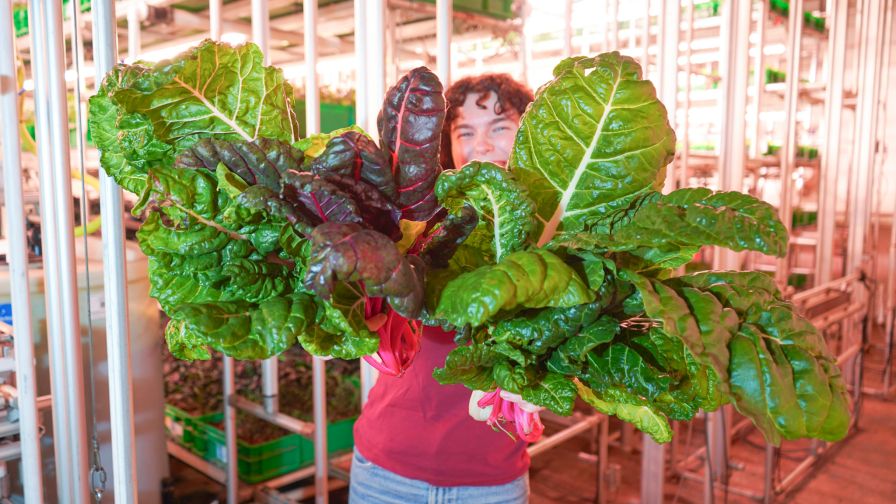
Zardo emphasized that “listening to the plants” remains one of the most undervalued skills for new and experienced CEA growers alike. A change in season, airflow, or substrate can show up first as subtle leaf burn or weak transplant vigor. Many of his own early challenges, he explained, came down to recognizing what had changed and correcting it before it cascaded into a full-facility issue. His experience reinforced a key CEA principle:
Plants are the most accurate sensors in the greenhouse, and growers who pay attention can prevent problems long before technology alerts them.


Trial, Error, and the Discipline of Small-Scale Testing
Across the panel, growers warned against implementing untested ideas at a commercial scale. Zardo described repeatedly piloting plug trays, substrates, and lighting recipes in small zones before committing them to full production. The discipline to test, refine, and anticipate seasonal recurrences proved essential to avoiding costly setbacks.
Rudnicki echoed that sentiment as he described AeroFarms’ 12-year evolution. The company’s journey from a 1,200-square-foot R&D alleyway facility to a 250,000-square-foot automated vertical farm required learning every system variable from scratch: water consistency, biofilm management, seed density, lighting interactions, and labor bottlenecks. Many lessons emerged only after realizing that reinventing the wheel slowed progress, says Rudnicki, especially in packaging and post-harvest workflows where warehouse automation already offered proven solutions.
Designing Facilities Around Economics, Not Ideals
The panelists repeatedly returned to unit economics as a key lesson. Rudnicki noted that AeroFarms’ financial turnaround and eventual profitability in its Danville, VA, facility emerged only after the company streamlined focus, exited R&D diversions, and designed operations around the economics of microgreens — fast cycles, high density, and favorable margins.
Zardo said that optimizing greenhouse design for specific crops — separating young plant areas, matching lighting zones, and building flexibility into expansion — helped Great Lakes Growers increase yields while limiting risk. Each new acre of greenhouse built, he said, reflects advancements in technological and operational learning.
A Reality Check: Protected Agriculture Magnifies Everything
Augustine offered a stark reminder that high-tunnel and hybrid systems bring their own pressures: heavy winds, snow loads, heat spikes, and substrate management amplify risk and demand constant attention. His advice for newcomers was to expect failure, bet on persistence, and be prepared for the emotional and financial volatility unique to protected agriculture. With organic nutrient programs, substrate turnover, three-crop rotations, and a growing network of contract growers, his message underscored that “trial and error is not a phase — it’s the job.”