Before the First Plant Goes In: Preparing a Greenhouse for the Season Ahead
 January 15, 2026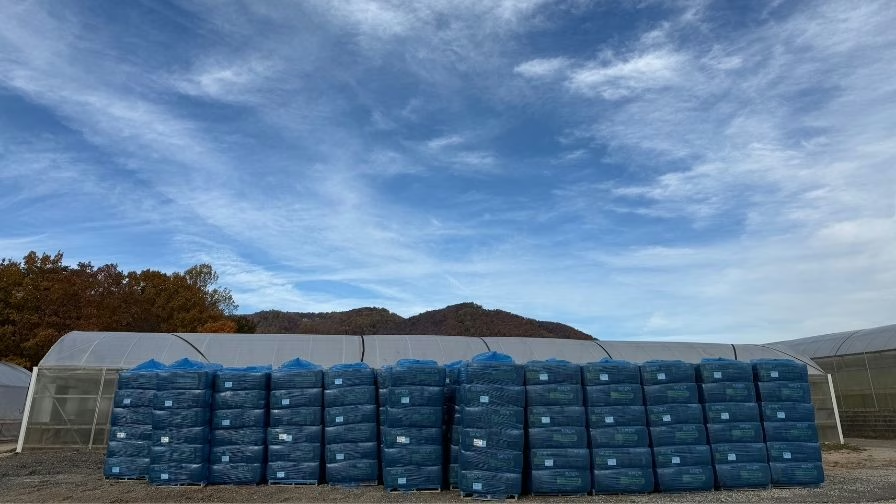
Palletized substrate stored off the ground and wrapped to protect against moisture. Proper storage preserves physical properties and supports consistency when planting begins weeks later. | Brandan A. Shur.
In many greenhouse operations, the period leading up to planting is one of the few times when systems can be evaluated, materials staged, and workflows planned without the pressure of an active crop.
Benches are empty, irrigation lines are quiet, and the pace is slower. For some operations, this window is treated as downtime — a pause between the last harvest and the urgency of the next crop. But for experienced growers, it’s one of the most valuable phases of the production cycle. What happens before the first plant goes in often determines how smoothly the season unfolds.
Once crops are in place, every adjustment becomes harder, slower, and more expensive. Preparation is the only time growers can shape the season without the crop pushing back.
Empty Houses Reveal the System More Clearly
A greenhouse without plants is unusually honest.
With no canopy to hide uneven delivery, irrigation patterns are easier to see. Drainage paths become more obvious. Sensor placement and coverage can be evaluated without plant responses complicating interpretation. This is one of the few moments when growers can observe how their systems behave on their own.


Before planting, running irrigation cycles, and simply watching where water moves can reveal issues that are difficult to diagnose later. A line that fills slowly, a zone that drains unevenly, or an area that stays wet longer than expected may not be urgent problems yet — but they are signals.
Once plants are in place, those same signals become mixed with growth responses, stress symptoms, and environmental interactions. Root systems begin to buffer problems, canopies alter airflow, and variability becomes harder to attribute to a single cause. Early observation helps keep system issues from becoming crop problems and gives growers confidence that when variability appears later, it is more likely biological than mechanical.
This is also why the time between crops matters. As discussed in a previous CEAg World article on maintenance between cropping cycles, many system issues are easiest to address when the house is empty, and the crop is not dictating the pace.
Early Decisions Lock in Consistency
Many growers spend the season fine-tuning setpoints, irrigation timing, and nutrient recipes. Those adjustments matter. But the most influential consistency decisions are often made before planting begins.
Choices around substrate type, container geometry, irrigation hardware, emitter spacing, and initial fertigation strategies establish a baseline that persists long after the first transplant. These decisions shape how forgiving the system will be when conditions fluctuate, labor shifts, or weather changes.
Changing these elements mid-season introduces variability that plants must adapt to while still trying to grow, flower, and fruit. Even well-intentioned improvements can disrupt uniformity if they are introduced after roots are established.
Prepared growers accept that no system is perfect. Rather than chasing optimization from day one, they prioritize stability. A consistent system gives plants something predictable to respond to and gives growers clearer feedback when adjustments are actually needed.
Preparation Starts with Staging, Not Speed
One of the clearest indicators of a prepared greenhouse is how materials arrive and where they go.
Substrate delivered early and stored properly may not feel urgent, but it removes uncertainty later — when time is tight, and decisions begin to stack. Pallets staged cleanly, elevated off the ground, and protected from the elements signal something important: The grower is not reacting yet. They’re creating margin.
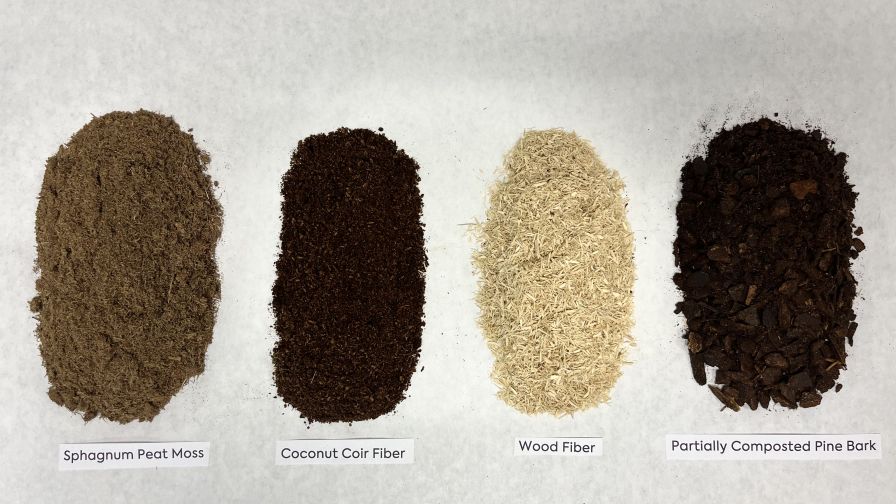
More than just an input, substrate is the physical foundation of the crop, influencing water distribution, air availability, nutrient buffering, and root development from day one. Receiving it early allows time to inspect shipments, verify consistency, and plan filling workflows. It also gives growers the opportunity to think through how materials will move through the space once planting begins, rather than improvising under pressure.
In practice, “early” means enough time in advance to allow inspection, proper storage, and adjustment before planting decisions become urgent. For many operations, that window is measured in weeks, not days.
When materials arrive just in time — or late — those decisions get rushed. Substitutions are made, storage becomes temporary, and handling becomes inconsistent. The crop carries that variability forward for months, even if everything else is managed well.
Margin Matters More Than Precision
Greenhouse production leaves little room for error, which is why preparation should include an intentional margin.
Extra substrate on hand, spare parts staged nearby, and realistic planting timelines reduce pressure when something unexpected happens — which it inevitably does. Weather delays shipments, equipment fails at inconvenient times, and labor availability shifts. These disruptions are part of production.
Just-in-time thinking may work in other industries, but in a greenhouse, it often increases risk rather than efficiency. When there is no margin, small problems escalate quickly. Decisions become reactive. Shortcuts become tempting.
Margin allows growers to respond calmly instead of urgently. It protects decision-making quality when the pace accelerates and attention is divided across multiple priorities. In practice, margin is often what separates manageable seasons from exhausting ones.
Preparing the Team Is Part of the System
The pre-plant window is one of the few times teams can slow down enough to walk through workflows, clarify expectations, and understand why certain steps matter. Once planting begins, training happens under pressure, and consistency becomes harder to maintain.
Taking time early to align the team helps prevent small deviations that accumulate over the season. When crews understand the system, they are more likely to notice when something feels off — and less likely to improvise in ways that introduce variability.
Preparation isn’t just physical. It’s cultural. Teams that are prepared early tend to operate with more confidence and fewer surprises once the season is underway.
Preparation Is a Phase, Not a Checklist
It’s easy to think of preparation as a list of tasks to complete before planting, but it’s really a distinct phase of production with its own purpose.
This phase is not about cleaning up the past or maintaining the present. It’s about setting the conditions for what comes next. Growers who use this window intentionally — staging materials, observing systems, locking in consistency, building margin, and aligning teams — enter the season with fewer unknowns and more control.
Once the first plant goes in, the pace accelerates quickly. The work done before that moment often determines how manageable the months ahead will be.