Business Planning: Opportunities for Growing Under Cover
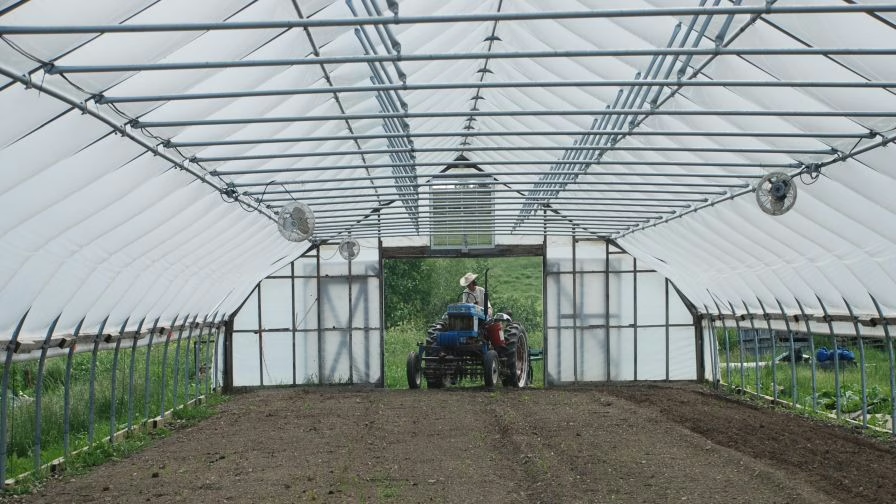
Photo courtesy of Rimol Greenhouse Systems
For seasoned outdoor growers, CEA presents a compelling business proposition. Whether it’s a simple high tunnel or a sophisticated greenhouse, CEA reduces land requirements; minimizes pest, disease, and climate pressures; shortens farm-to-market logistics; and more effectively utilizes resources and inputs. It also expands the growing season, leading to increased output and more sales.
“With CEA, your revenue per square foot dramatically increases, no matter what you’re growing,” says Bob Rimol, founder and president of Rimol Greenhouse Systems, a Hooksett, N.H.-based manufacturer of commercial greenhouses.
But success hinges on recognizing the unique challenges and opportunities that emerge when blending distinctly different growing processes.
Built-In Benefits
Rimol says that growers will more effectively and efficiently use inputs like water and fertilizer in CEA than in outdoor operations. Similarly, pest pressure is less pervasive in a controlled environment and is often managed with beneficial insects.
“In CEA, you may have a finite amount of resources, so you have to be very efficient with water, labor, fertilizer, pesticides, the timing of your plantings, and the time of harvesting,” he says. “And with today’s technology, it’s becoming easier to do that.”


Beyond optimizing production and resource efficiency, another CEA strength for the open-field farmer is its defining characteristic as a controlled environment.
“As extreme weather events become more frequent globally, the challenges of conventional farming intensify, making a consistent harvest increasingly difficult to secure,” Rimol says. “CEA helps mitigate some of that risk.”
While not impervious to extreme weather events like hurricanes or tornadoes, CEA structures provide a degree of protection against high winds and other environmental stressors like drought and extreme heat or cold that can devastate open-air fields. This reduced reliance on Mother Nature offers the grower a significant operational advantage and peace of mind, Rimol adds.
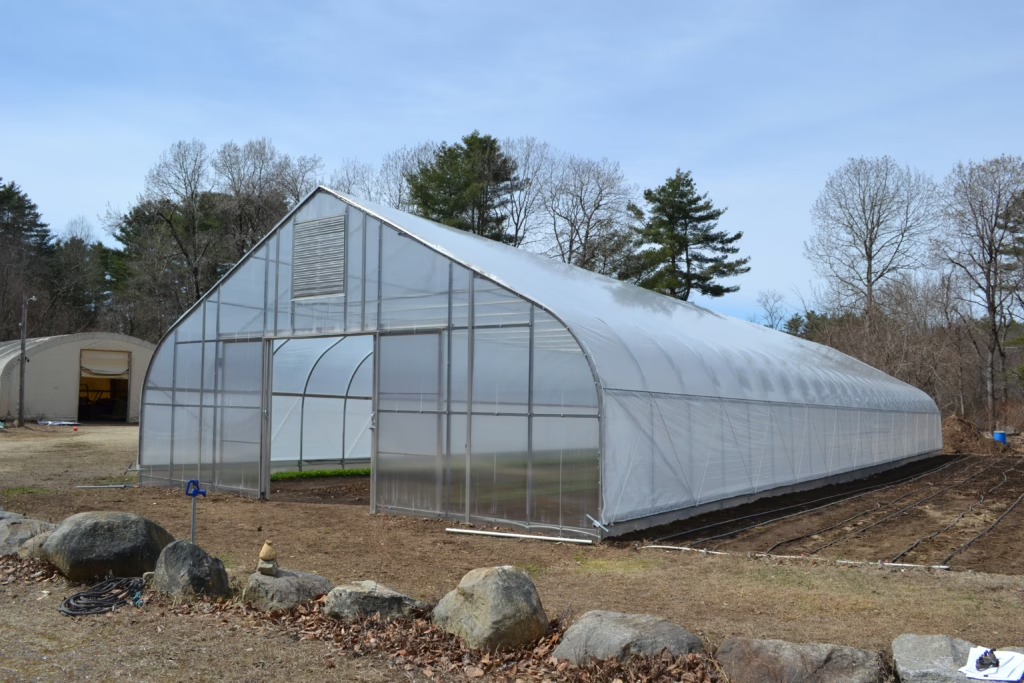
For growers just getting started in CEA, investing in a simple structure is typically recommended. | Photo courtesy of Rimol Greenhouse Systems
Structures and Crops
For outdoor growers integrating CEA, a simple but strategic approach is the safest way to start.
Rimol cautions against getting swept up by the promise of large-scale structures and high-tech features. Instead, he says that a 30-by-96-foot greenhouse is a practical mid-scale starting point for outdoor growers to gain a foundational understanding of CEA’s nuances and benefits.
“The first [CEA structure] is the toughest one, from constructing it, to growing in it, to selling,” he says. “But once you get that first one out of the way, you start to figure things out pretty quickly.”
Similarly, advocating a “dip your toe in the water” strategy over an immediate deep dive, Little recommends a modest greenhouse or hoop house. This practical entry point simplifies the initial setup, allowing open-field farmers to assess CEA’s alignment with their existing operations and, crucially, its potential for genuine profitability before scaling up. And he advises against completely deviating from what the grower knows best.
“If you’re looking to either diversify or hedge your income, or you’re just interested in this method of farming, then don’t turn away from what you’re already doing really well holistically,” he says.
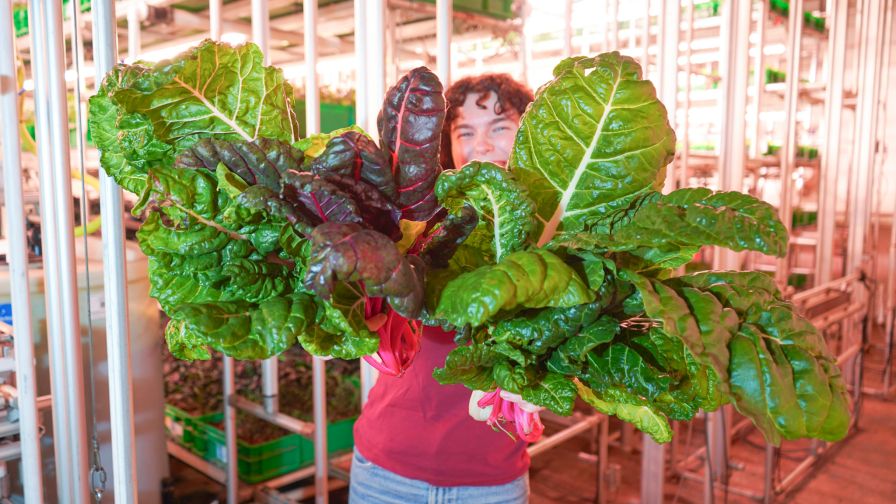
Little recommends that open-air growers initially prioritize CEA’s “bread-and-butter crops”—such as leafy greens, vine plants, and herbs—to build essential experience and mitigate financial risks.
“Stay away from the exotic and high niche market crops,” he says. “The goal is to get a few seasons under your belt without a massive upfront capital investment, especially given the current economic climate. This allows you to experiment and get a feel for CEA before committing significant resources.”
Furthermore, Little stresses that open-field growers should seek mentorship and build professional relationships within the CEA community. “Look for someone you can trust to help you build out this part of your business, whether that’s through a supplier, vendor, or another grower in the marketplace who can help propel you forward,” he adds.
Public universities with agricultural programs and county-based extension offices are excellent resources, as well. Experts there—along with the state department of agriculture or local farm bureau—can be particularly helpful with navigating and securing required building permits and approvals.
Overall, Rimol says, think about a long-term vision from the outset—a strategy where, say, a single greenhouse could expand to 10 over time. This foresight helps growers weigh practical considerations, such as choosing between gutter-connect and free-standing structures, and assessing their property’s capacity for growth.
“A well-defined growth plan is crucial,” he says. “It ensures that as success is achieved, the next steps are clearly mapped out.”
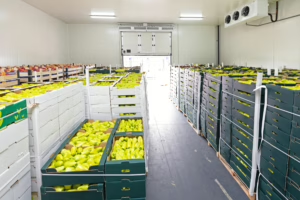
Adequate cold storage ensures produce remains visually appealing, healthy, and safe. | Photo courtesy of Adobe Stock
Logistics
The inherent nature of indoor farming introduces complexities not often associated with less perishable, open-air crops that go directly from field to food processors. Consequently, some CEA growers may face challenges related to storage and timing.
Adequate cold storage is essential to maintain freshness and extend shelf life, Little says, ensuring produce remains visually appealing, healthy, and safe. Beyond storage, timing is paramount, with the key factor being the customer’s immediate needs.
If, for instance, a local farmers market is already saturated with leafy greens and tomatoes, a grower needs the capacity to hold onto their product and keep it fresh until another buyer can be secured. While this might seem obvious, Little warns that those new to CEA often overlook the need for flexibility.
“You can’t rely solely on one kind of customer,” he says. “For example, you may be supplying a restaurant, but business may slow. Suddenly, they’re not buying a whole lot. In a controlled environment setting, you don’t want to be left holding the bag with a lot of inventory. So, you need to make sure you have trusted partners you can sell to and you’re not putting all your eggs in one basket.”
Is CEA Right for You?
There’s no guarantee that adding protected crops to outdoor operations will increase profitability. Comprehensive due diligence is in order, assessing not only the necessary financial commitment but also the projected long-term return, Little says.
CEA’s costs for labor, energy, water, infrastructure, and materials differ from open-field farming, he adds. These variables fluctuate depending on the crop, the grower’s geographic location, and the specific controlled environment employed.
To effectively gauge CEA’s viability, you’ll want to conduct a break-even analysis comparing total costs to total revenue, which will help pinpoint the volume of product needed to cover expenses and generate profit.
“Each of those components—labor, energy, water, etc.—is going to introduce its own issues and variables into the equation of whether or not [CEA] becomes a profitable operation,” Little says. “The more detailed you get with your analysis, the better understanding you’ll have of your operation. Breaking those factors down individually makes you aware of where you’re exposed to potential loss or to a potential increase in expense.
“While you’re growing in a controlled environment, it isn’t a risk-free environment,” Little adds, noting that success ultimately hinges on basic business principles. “At the end of the day, you’re investing capital and you’re hoping there’s a market to sell your products.”
Editor’s note: This article was originally published in the CEAg World Industry Report: Protected Crops.