Virginia’s CEA Legacy: Will a New Governor Mean New Priorities?
 July 31, 2025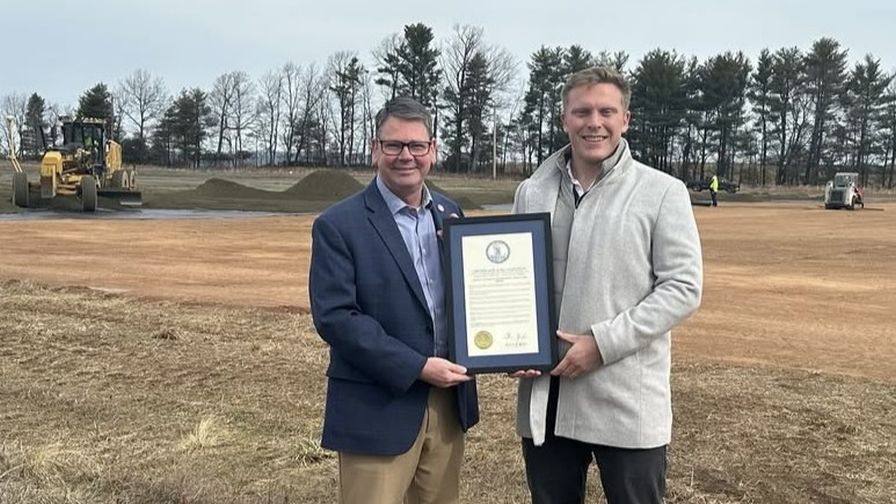
Virginia Secretary of Agriculture and Forestry Matthew Lohr (left) and Ben Alexander from Oasthouse Ventures at the future site of Oasthouse’s first U.S. greenhouse operation. | Photo: Matt Lohr
When Glenn Youngkin took office as the governor of Virginia in 2022, he brought in Matt Lohr as Secretary of Agriculture and Forestry. Lohr, a fifth-generation Virginia farmer who’d previously served as chief of the USDA-Natural Resources Conservation Service (among other government posts), had a meeting with Youngkin early on about the new governor’s fascination with the future of farming in the state.
“In that conversation, I mentioned some of the greenhouses and vertical farms that were already operating here,” Lohr recalls. “And the more I explained why [CEA] was a good thing, the more questions he asked.
“At the end of the meeting, we stood up and he said, ‘Well, Matt, your goal is simple. I want us to be No. 1 in CEA by the time we leave office.”
The Clock Is Ticking
Fun fact: Virginia is the only state in the U.S. where a governor is prohibited from serving back-to-back terms. So Lohr’s goal had a hard stop, and it’s now just six months away.
“We’re really hitting our stride,” Lohr says, “and we talk about what comes next. But we’re not going to be here to see that happen.”

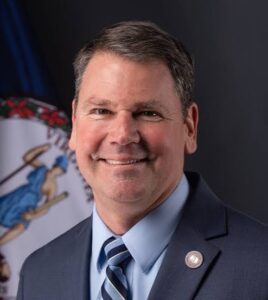
Matt Lohr
Fortunately, there are plenty of accomplishments already on the books. Under Youngkin and Lohr, Virginia has built a robust ecosystem supporting CEA growth. Just a few of the state’s claims to fame include:
- The Governor’s Agriculture and Forestry Industries Development fund has awarded more than $1.7 million to incentivize CEA projects. The payoff: approximately $475 million in capital investments, plus the creation of nearly 900 new jobs across Virginia.
- Virginia’s CEA Innovation Center, a public-private partnership led by the Institute for Advanced Learning and Research and Virginia Tech, is firmly embedded in statewide research and workforce training for indoor agriculture.
- In 2023 and 2024, the state passed tax exemptions on CEA infrastructure, treating equipment as farm machinery for personal property tax purposes.
- Virginia is home to operational hubs for significant CEA players like Red Sun Farms, Gotham Greens, AeroFarms, and Plenty (both emerging from financial difficulty), and the first U.S. outpost from U.K. grower Oasthouse Ventures, whose 65-acre greenhouse site for tomatoes is currently under construction.
Setting the Stage
To create the right environment for statewide CEA adoption, Lohr says, Virginia employed a three-pronged approach. The first one is state support for economic development through two cooperating secretariats: Lohr’s department, which runs the Ag and Forestry Industry Development Fund (AFID), and the Secretary of Commerce and Trade, with its Virginia Economic Development Partnership (VEDP). “We meet regularly and have experts from the ag side and from the economic development side working together,” he says. “And we have money. VEDP has incentive programs for things like workforce training, and we can piggyback with AFID, so it’s unique and very helpful.”
Other initiatives, such as more favorable tax policies around growing equipment and greenhouse structures, have enabled CEA businesses to save millions of dollars.
Prong #2 is workforce readiness and job training, which, thanks to a program called GO TEC (“Great Opportunities in Technology and Engineering Careers”), starts as early as middle school. Among the training modules offered through GO TEC is a six- to nine-week unit on ag technology that includes CEA methods. Other programs target high schoolers and college students, with the development of associate degrees at Virginia Western and CEA-related certificates to supplement other degrees at schools like Virginia Tech and Virginia State.
The third prong is research. The CEA Innovation Center in Danville, Lohr says, “has a full staff and does contract research for companies, as well as work that supports the overall industry.” It’s also the site of CEA Summit East, an annual research- and knowledge-sharing event.
“These three components are what separates Virginia,” Lohr says. “We’ve torn down the silos to work across different agencies, and the governor is very big on reducing regulations for CEA companies looking to come here.”
Momentum, Energy, and the View Ahead
Lohr is particularly excited about the potential around alternate energy solutions and tapping into other Virginia resources. The Oasthouse project, for example, intends to employ wood biomass fuel.
“They’re going to burn 31,000 tons of our hardwood residuals to generate heat,” Lohr says. “Forestry is our third-largest industry and the more uses we can come up with for the biomass, it’s a win-win all the way around.”
Another key state initiative is facilitating the colocation of data centers and greenhouses. “Virginia has more data centers than any other state in the country, so it’s a natural fit,” Lohr says. This type of colocation is gaining momentum in the CEA industry because waste heat from servers can warm the growing environment, reducing energy costs for both operations while maximizing land-use efficiency.
Lohr stresses that maintaining a leading edge on energy is critical to Virginia’s CEA future—and that it’s one of the question marks for the next administration.
“Some of these big companies, they want 100-plus acres, they want utilities. And the easiest and best sites have already been picked. It’s going to be a challenge, making sure we can keep up with the demands,” he says. “[Governor Younkin] has been a huge proponent of ready sites in Virginia, but it’s expensive. For the next administration, is that going to be a priority or not?”
Overall, Lohr is hopeful. He says he’s bullish on CEA, including vertical farm operations, and he’s proud of what Virginia has built.
“I do feel like whoever gets elected in November will want to continue the success we’ve had,” he says. “This is a very nonpartisan issue.”