A Practical Guide to Scaling Your CEA Operation
 November 4, 2025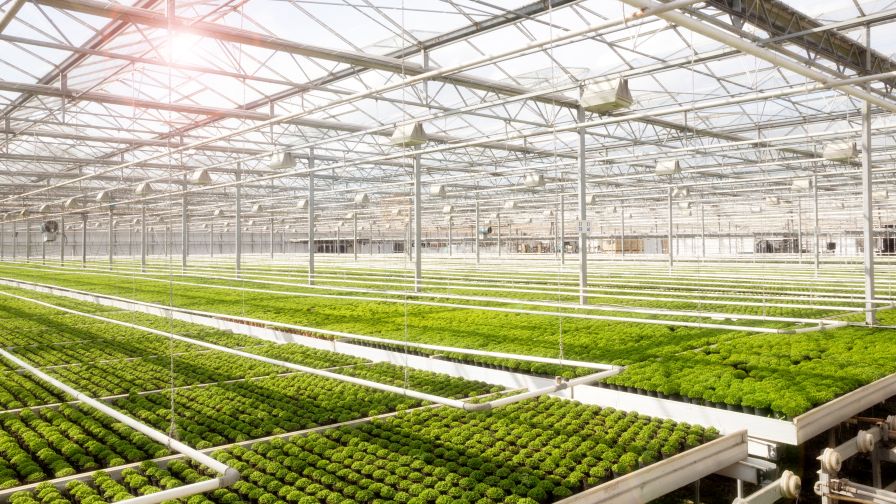
Industrial greenhouse with rows of cultivation. | Photo courtesy of Adobe Stock
When we started Rooted Robotics in 2017, our plan was straightforward: Build an automated vertical farm focused on lettuce and other leafy greens. We had the technology vision, the engineering capabilities, and the business acumen to execute. What we didn’t fully understand is that we would face the same reality that many indoor growers do.
That changed when Eric Roth joined our team as chief operating officer two-and-a-half years ago. Roth had been in the CEA industry since 2011, and his experience opened our eyes to a fundamental challenge: The pathway to expansion for small CEA operations is far from clear. Through countless conversations with growers, we’ve learned that scaling isn’t just about having better equipment—it’s about understanding which investments will actually move the needle.
Labor: Your Biggest Scaling Lever
Labor drives the cost of your farm. This is the single most important factor that determines whether scaling will be profitable or painful. The goal should be clear: automate yourself out of farm labor where you can so you can work on the business, not in the business.
Take a close look at anything currently done by hand and consider how to shift toward automation or operator-assisted equipment that increases both speed and consistency. This becomes crucial when dealing with employee turnover, as processes will be performed the same way no matter who executes them.
Start with simple wins: automated irrigation systems, environmental monitoring with phone alerts, or basic seeding equipment. These investments often pay for themselves quickly while freeing up time for customer relationships and strategic planning.


Master Your Unit Economics
Before considering any scaling investment, understand your unit economics at a granular level. What are you growing? How much does it cost to grow, package, and deliver each unit? This analysis requires understanding every cost component and how those costs change with volume.
Microgreens and edible flowers have gained popularity in CEA specifically because of their unit economics—high value per square foot, short growth cycles, and premium pricing. However, the best crop for your operation depends on your local market, growing capabilities, and distribution channels.
Simplify Your Sales Process
Small operations often start with farmers markets, community-supported agriculture systems, or direct-to-restaurant sales—relationships that provide valuable feedback and premium pricing but don’t scale efficiently. The key question: At what scale do you start thinking about distributors? Retail? Wholesale?
Each channel has different requirements, payment terms, and volume expectations. At scale, removing outside logistics becomes increasingly important. Working with wholesale distributors and retailers becomes viable as volume increases, but requires consistent quality, reliable supply, and often significant lead times for approval.
Build Operational Infrastructure Early
Consider every change required when taking on new customers and more risk. Food safety certifications, good agricultural practices (GAP) compliance, and integrated pest management (IPM) strategies aren’t just regulatory requirements—they’re competitive advantages that open doors to larger customers.
Many operations delay these investments until required by a specific customer, but proactive implementation can accelerate scaling opportunities. Having certifications in place before you need them allows quick response to new opportunities and demonstrates operational maturity.
Leverage Your Growing Business Position
Here’s advice you rarely hear: Leverage your position with suppliers. You are expanding your operation, meaning you have a successful and growing business. Suppliers want to work with companies like yours. This creates opportunities to leverage relationships with experienced salespeople from media companies, seed companies, grow system providers, and lighting manufacturers.
These industry professionals have seen hundreds of operations and can provide input on their areas of expertise. They understand market trends and often know about opportunities before they become widely available.
Creating More Winners in CEA
Our experience building Rooted Robotics has reinforced something Roth told us from the beginning: Successful scaling isn’t about copying what large operations do. It’s about building systems that allow organic growth while maintaining the quality and relationships that made you successful initially.
The most successful scaling efforts focus on removing bottlenecks and building repeatable processes rather than simply adding capacity. This might mean investing in automation before you absolutely need it, obtaining certifications before customers require them, or developing supplier relationships while you still have time to be selective.
Understanding the plight of small farmers looking to expand has fundamentally shaped our approach at Rooted Robotics. In our experience, the pathway to expansion may not always be clear, but it’s achievable for operators who approach scaling as methodically as they approach growing.