2025 Visionary Grower Finalist: Nona Yehia, Vertical Harvest Farms
 November 3, 2025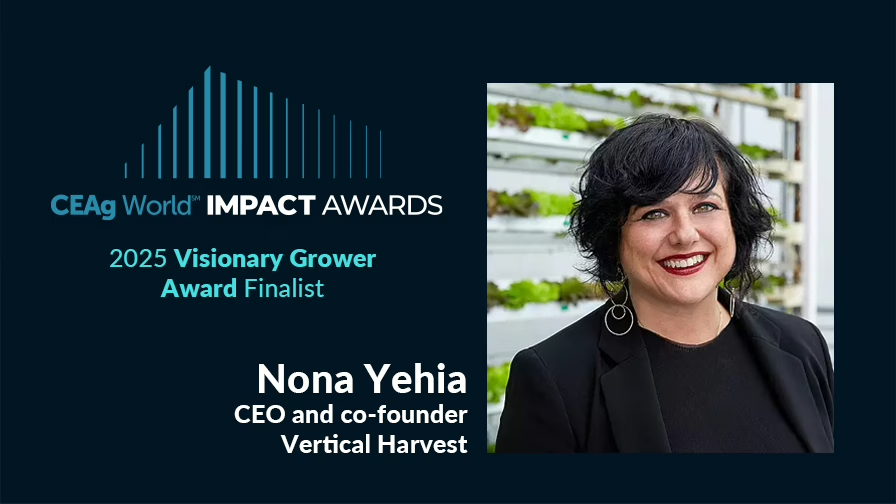
Nona Yehia is one of three finalists in the Visionary Grower category of the inaugural CEAg World Impact Awards.
 Nona Yehia of Vertical Harvest Farms is one of three finalists in the Visionary Grower category of the inaugural CEAg World Impact Awards. The Visionary Grower Award honors an individual who has made a transformative impact on their own CEA operation, leading to remarkable gains in yield, resource efficiency, and/or profitability. The individual’s contributions to land stewardship, resource conservation, environmental preservation, and/or food security will also be considered.
Learn more about Yehia below, and watch CEAgWorld.com for more profiles of our finalists.
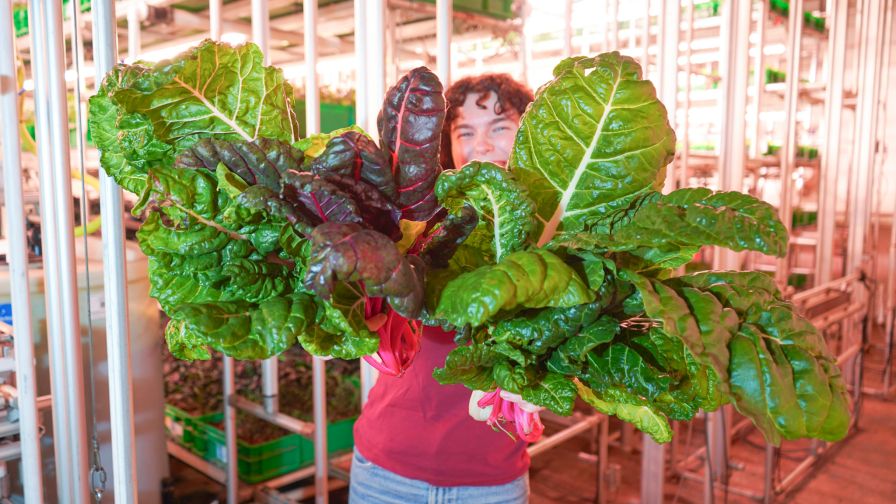
An architect by trade, Nona Yehia started Vertical Harvest Farms in Jackson Hole, Wyo., with a vision: making food production a critical part of civic infrastructure in urban environments. As she describes it, Vertical Harvest is a tool that makes food easily accessible in metropolitan areas. “We’ve designed a technology that meets people where they live in cities, and we’ve designed it to operate at scale,” she explains.
But innovation alone can accomplish only so much. The main driver of Yehia’s vision, and the main inspiration behind her work in CEA, is her team. “Our business has an incredibly strong culture,” she says. “That culture is built on the backbone of diversity and inclusion—that’s why we’re such a strong team.”
In fact, how Yehia has structured her team and her labor-sourcing approach set her apart from other business models in the CEA space, granting her “visionary grower” status.


The ‘Grow Well’ Approach
Growing up with a disabled brother, Yehia recognized at an early age that society wasn’t built to support everyone as it was designed to support her. “I was an advocate before I even knew what the word meant,” she says.
This experience spurred her to create an inclusive community that’s based on food: a new system that feeds people where they are while employing people who have historically struggled to find jobs. Considering more than 80% of people with disabilities are unemployed and agriculture struggles to find workers, her employment model is a win-win.
“Not only is this the right thing to do, but it’s also the logical thing to do,” Yehia says. “We struggle with labor shortages in agriculture and this is a population that can contribute to the workplace in many ways. I’m basically connecting dots.”
In addition to being a labor solution, Yehia’s employment model is a source of empowerment for underserved communities. While starting her own vertical company hasn’t been the easiest (or most reliable) career path, she reflects on how her brother and people like him aren’t given the opportunity to become entrepreneurs.
“We’ve given them a chance to be a part of something important,” she says. “They can help build something that’s lasting, contributes to society, and gives them a strong connection to human environmental health. Nobody ever gave my brother that choice.”
Prioritizing Creativity and Collaboration
Yehia suggests that taking an innovative approach to CEA and being upfront about the results, like her labor-sourcing model, could solve some of the other critical problems vertical farmers are facing. While she won’t share all of her business plans and ideas with other growers, Yehia says that best practices must be made known.
“I would never share my entire blueprint, but I would share elements of it,” she says. “I would ask what other professionals think, whether they had any questions, and how it can help them.”
However, no matter how many tips and tricks she shares, Yehia warns that problems are bound to occur for every grower in an industry that is built upon innovation. It’s just a matter of problem-solving and openly sharing experiences (both good and bad) with other growers.
“I started growing indoors in 2009, so 10 to 15 years later we’re finally starting to talk to each other,” she says. “I’m always willing to be involved in the conversation. I’ve been on pretty much every ag tech board when it comes to indoor farming to help steward the discussion.”
Looking Ahead
In the short term, Yehia aims to prove that her new facility in Westbrook, Maine, will be profitable and have a substantial impact on the local community. “This next year is going to be really important for us,” she says. “We’re proving the profitability of the Maine farm, its yields, and its impact model.”
Her short-term goals, she says, feed into the long-term goals. Once her newest facility has proved itself, Yehia plans to build a farm in other urban areas. In a perfect world, she would have a farm in every “Westbrook-sized” city in the U.S.
“I hope that Vertical Harvest becomes the status quo for indoor agriculture in metropolitan areas,” she says, “and that when even one municipality doesn’t have an urban farm that approximates Vertical Harvest, people will wonder why or what went wrong.”
The winners of the CEAg Impact Awards will be announced and honored live on stage at the kickoff ceremony for the CEAg World Conference and Expo on Nov. 20, 2025, in Durham, N.C. To learn more and join us at the conference, visit CEAgWorld.com/events.