Signify and U. of British Columbia Collaborate on Sustainable Pepper Production
 April 16, 2026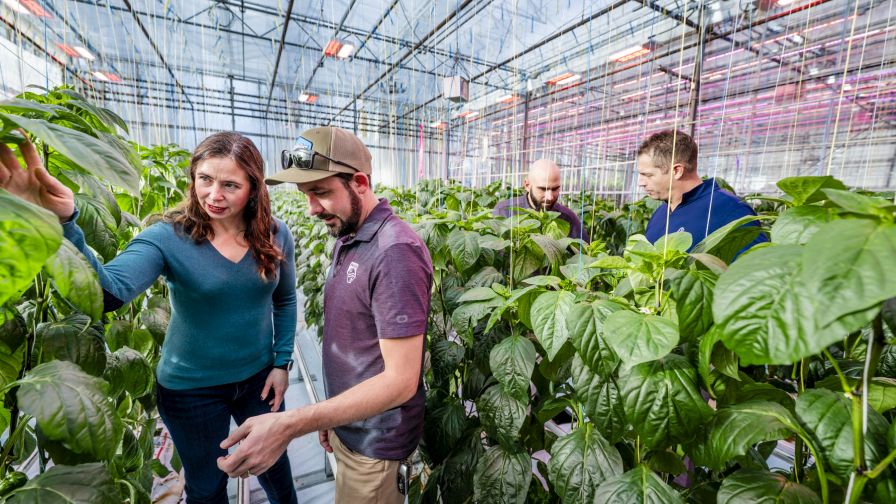
Photo: Signify
Signify has announced its fifth year of cooperation with the University of British Columbia (UBC) to develop a production protocol for growing peppers year-round under LED lighting. The multi-year trial paves the way for growers to capitalize on the market opportunity to provide locally grown bell peppers during the winter months.
Researchers at UBC and plant specialists at Signify saw a need for an extensive trial under the climate and growing conditions specific to Canadian growers, which led to the start of the trial in 2021. Research in the first four years focused on demonstrating the feasibility of cultivation under LED lighting by selecting the right genetics and light spectrum. The fifth year of the UBC trial is using color-tunable lights in support of year-round production.
According to Statistics Canada data, Canadian growers produced 175 million kilograms of greenhouse peppers in 2024, but about a quarter of the annual pepper consumption is being imported, due mostly to the fact that Canadian-grown peppers haven’t been grown in greenhouses during the winter months due to a lack of natural light levels.
The trial setup for 2025-2026 uses the new Philips GreenPower LED toplighting force (TLF) 2.1, providing dynamic light-steering capabilities across three separate channels, which allows for full control of the desired light recipe. In other trials conducted by the global Signify team, there has been a noted benefit of incorporating far-red light into the spectrum, which is being further evaluated during the current trial. Additionally, researchers are evaluating and fine-tuning other aspects of production, such as variety selection, pruning techniques, pest and disease control, temperature, energy conservation, and more.
“We are looking at all aspects of production in order to develop a comprehensive production protocol that growers can implement into their schedule,” said Melina Biron, greenhouse research manager at UBC, in a release.


The trial is scheduled to conclude in June 2026, at which point detailed findings will be shared.