Red Fire Farm: Extending the Growing Season by Keeping it Simple

 October 8, 2025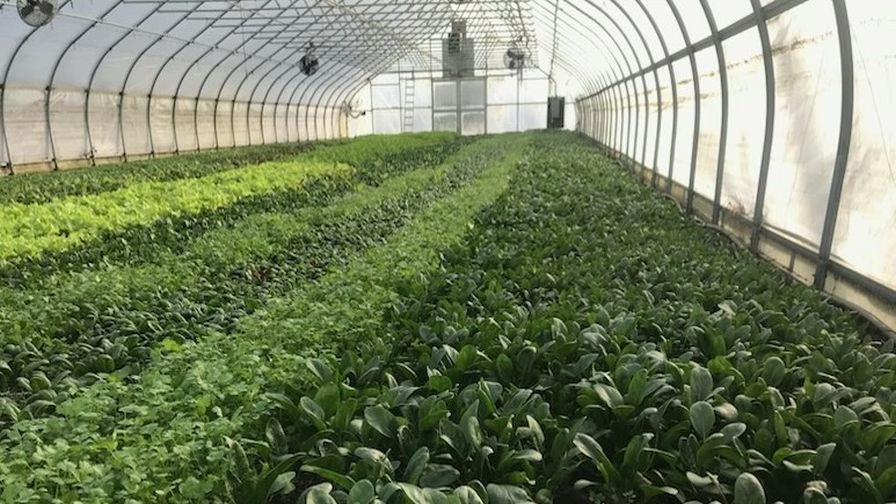
To extend its season, Red Fire Farm added greenhouses and high tunnels to grow various crops in a strictly soil-based operation. | Photo courtesy of Red Fire Farm
Red Fire Farm in Montague, Mass., grows just about every vegetable on the Northeast market on its roughly 200 acres. It also runs a sizeable protected agriculture division, with about 1.25 acres of greenhouses and high tunnels, plus six 250-foot-long caterpillar tunnels.
Like many outdoor growers, owner Ryan Voiland uses protected cropping systems to extend his growing season. The main crop he grows under cover in the spring and summer is tomatoes, though he devotes some space to cucumbers, peppers, spring greens, bunch carrots, and ginger.
“The greenhouses and high tunnels are an important part of our season extension strategy,” he says. “In a climate that’s cold for almost half the year, these structures help us greatly expand our marketing season.”
In the winter, the greenhouses switch over to greens.
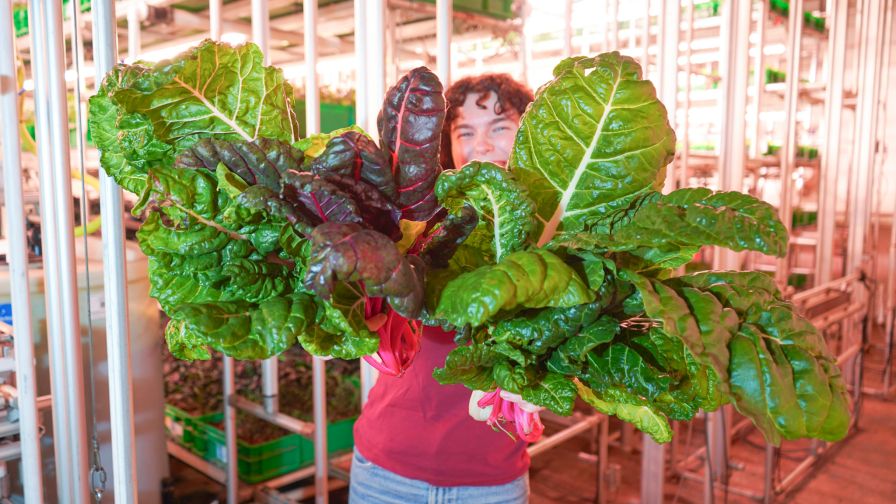
“We get better quality greens in the winter in high tunnels than we do outside during the June harvest. The spinach we grow in the winter is the best tasting of the year,” he says. “Our salad mix, kale, lettuce, and spinach are what really drives people to winter farmers markets.”


In fact, Voiland has had to turn customers away since he can’t meet the demand for winter greens with the protected space he currently has.
“It drives us to consider building more greenhouses and high tunnels,” he says. “We can already grow all the early summer produce we can sell in our existing space.”
Committed to Soil
Despite his commitment to protected crops, Voiland has no plans to grow hydroponically. He feels confident that soil is the most effective way to grow healthy, flavorful plants.
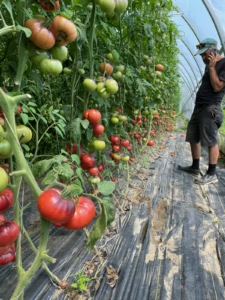
In the spring and summer, Red Fire Farm’s main under-cover crop is tomatoes. | Photo courtesy of Red Fire Farm
“I feel that plants grow better and taste better when grown in healthy soil,” he says. “At our farm, we’re dedicated to the concept of growing in soil and improving that soil over time.”
To keep his soil at optimal health, Voiland uses blood meal, peanut meal, sulfate of potash, greensand, Azomite, and rock phosphate.
“We do annual saturated media soil testing before each tomato crop cycle to help dial in and optimize the nutrient additions,” he says.
To protect his tomato crop from disease, Voiland prefers grafted plants.
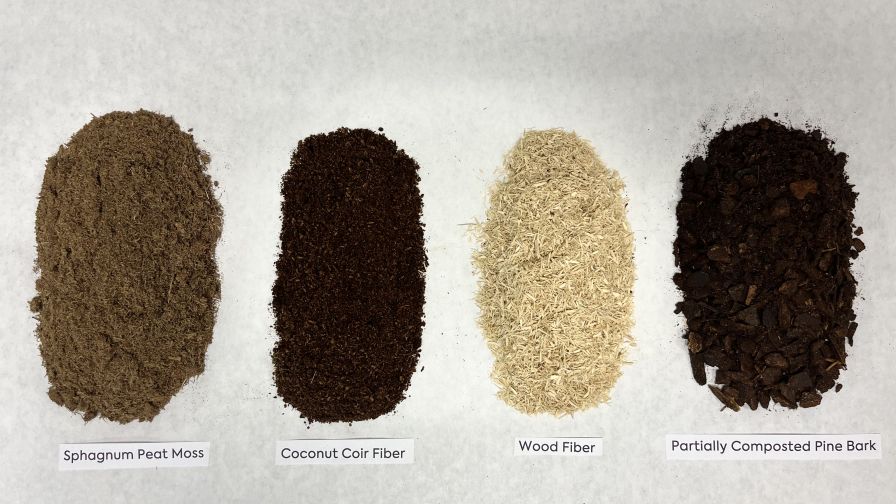
Plants starts, naturally, start out in plug trays with a growing media. Voiland uses a peat-based media amended with compost and organic fertilizers.
The Trade-offs
At the height of the COVID-19 pandemic in 2021, Red Fire Farm saw a spike in demand for fresh produce. Voiland stayed conservative with his greenhouse production at the time, waiting to see if the demand would continue. As it turns out, that demand has gradually decreased over the last four years. “No one is staying home or cooking quite the same way they did during the COVID years,” he says.
Other factors outside of Voiland’s control have affected the scale of his protected crop division, as well. “There’s a lot of stuff going on politically that’s really impacting our society,” he says. “There’s so much price pressure due to tariffs and inflation that the cost of production just continues to go up.” And that includes building structures.
Shifting Structures
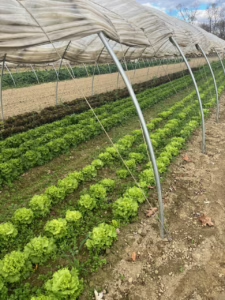
While caterpillar tunnels are less expensive than high tunnels, growing under them is more labor intensive. | Photo courtesy of Red Fire Farm
Voiland is strategic in his approach to building and maintaining his protected crop structures. “We design them so we can fit our tractors and spader in for primary tillage (as long as we put down the roll bar),” he says. “But we can’t do proper mechanical bed forming, planting with mechanical transplanters or use cultivating tractors inside the greenhouses.”
As such, he says, growing crops in the structures is mostly an exercise in gardening with hand tools: “But the extra labor is worth it for some crops.”
While less expensive up front, growing crops under caterpillar tunnels is an even more labor-intensive practice. Voiland explained how each tunnel must be built over crop beds each season, taken down, then rebuilt again. “As the cost of labor climbs, it’s a questionable equation of whether it’s worthwhile to use that system,” he says.
Voiland hopes to phase out the caterpillar tunnels altogether to help streamline production, replacing them with high tunnels. “It’s a little more work and a bigger expense to build high tunnels, but I think that we can grow things less expensively in them instead of moving the caterpillars around all the time,” he says.
But even high tunnels, he says, need to be managed closely. “You have to babysit your structures in terms of maintaining the temperatures, venting, and watering,” he says. “You need a plan to make sure your farm is taken care of every single day. Even when it’s the weekend or a holiday and nobody wants to work, be prepared to be tied to your structure.”
Moving forward, Voiland plans to implement more automation technologies on Red Fire Farm to ease labor pain points. He’ll start with electronic motors to roll the sides of his high tunnels up or down as needed.
“We want to install these motors on a few of our existing structures,” he says. “It will help us save money on labor, and the sensors will tell the tunnel when to open or close depending on its internal temperature. This lets workers harvest and complete other tasks on the farm uninterrupted and helps avoids major fluctuations in temperature inside the structure.”
Editor’s note: This article was originally published in our Industry Report: Protected Crops.