NC State Alumna Helps Develop First Seedless Blackberry
 August 9, 2024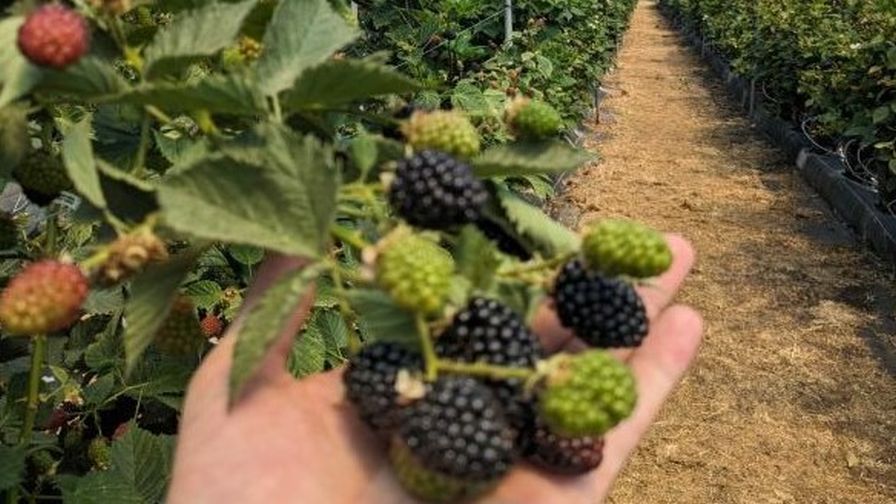
Berries growing under SecondSky system
According to NC State University, their alumna Lauren Redpath helped develop the world’s first seedless blackberry through plant gene-editing.
Since she earned her doctoral degree from NC State University in 2021, Redpath has worked at Pairwise, a Durham-based company that applies gene-editing innovation in food and agriculture. Along with her colleagues, Redpath used CRISPR (Clustered Regularly Interspaced Short Palindromic Repeats) technology to produce a seedless blackberry by editing its DNA.
This sophisticated technology identifies specific points of a genome that can be altered to change traits in a plant. Once CRISPR identified the traits that needed to be changed in a blackberry, Redpath and her team found the correct genetic sequence and edited the fruit to get the result they wanted.
According to Redpath, Pairwise focused on blackberries because they have several traits that could benefit from gene-editing.
“With many gene targets yet to be discovered, the blackberry is an appealing choice for Pairwise to make major advances in crop improvement,” she said. “We have already achieved several blackberry traits that offer grower and consumer improvements, including thornlessness and seedlessness.”

Blackberries also have a shorter growing window from planting to fruiting, making it easier for Pairwise to make a seedless variety.
“Now that we’ve achieved the seedless trait in blackberries, we can take those learnings and apply them to removing the pits in other fruits, such as cherries,” said Redpath.
To learn more about Redpath’s journey at NC State and how it led her to Pairwise, visit NC State’s website.