Increasing Ag Tech Accessibility for CEA Growers
 September 17, 2025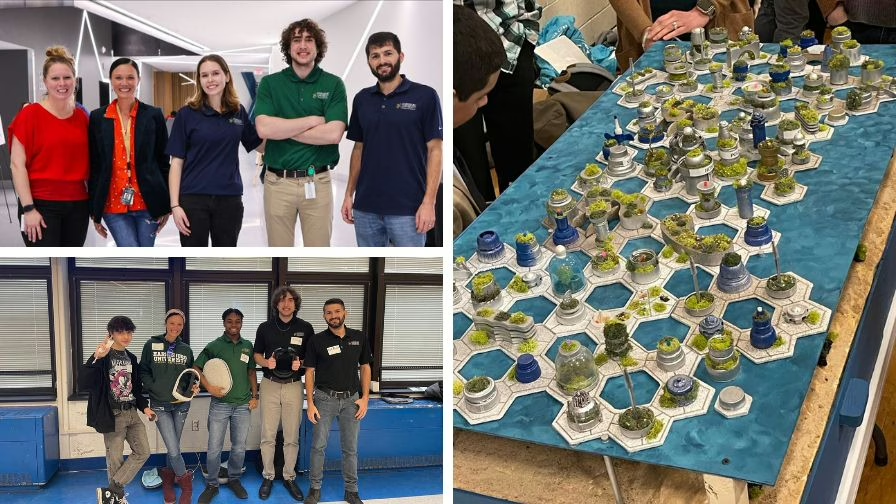
Attendants at the Harriburg University Health Equity Summit, Future Cities hydroponics demonstration, and attendants at the Future Cities competition. | Dr. Jen Mowery
The promise of agricultural technology is enormous. From advanced climate control systems to AI-driven crop monitoring and predictive analytics, ag tech offers tools that can boost productivity, reduce waste, and support long-term sustainability in greenhouse operations. Yet for many small and mid-sized growers, this potential feels just out of reach. Barriers such as high costs, steep learning curves, and uncertainty about ROI often slow or stop adoption altogether.
At Harrisburg University (HU) — where I teach topics like agile project management, lean thinking, innovation, and entrepreneurship — I encourage students to embrace the mindset of “just get started.” This means testing ideas quickly, learning from real-world feedback, and adapting in ways that keep momentum going. These principles, drawn from the lean startup philosophy popularized by Eric Ries (as outlined in The Lean Startup), are just as relevant to agriculture as they are to technology.
(Left to right) Dr. Rachel Fogle, Dr. Jen Mowery, HU students, and Professor Matthew Rissler at the Health Equity Summit. | Dr. Jen Mowery, Harrisburg University
Last year, I co-led a session at the HU Health Equity Summit with Rachel Fogle, Ph.D., that demonstrated what is possible when collaboration and experimentation drive problem-solving. Our team of graduate and undergraduate students came together to address urban food insecurity for mothers and infants. Over four one-week sprints, they rapidly prototyped an immersive virtual reality education tool to reimagine community access to healthy food. The result was not a fully polished product but a working proof of concept ready for testing and refinement.
That project underscored an important truth: You do not need perfect conditions, unlimited funding, or advanced infrastructure to start implementing innovative solutions. You need a clear goal, a willingness to experiment, and a process that allows you to learn as you go.

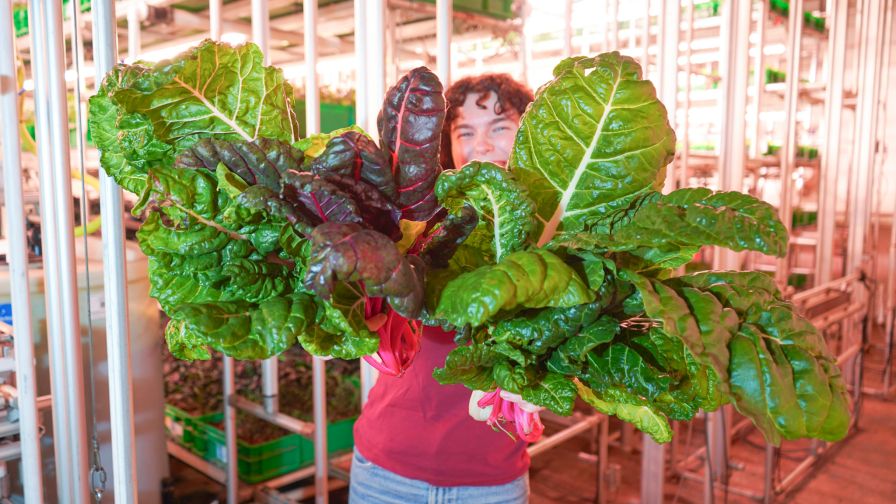


An aquaponics project demonstration at the Future Cities competition. | Dr. Jen Mowery, Harrisburg University
That same energy was on full display again earlier this year at the Future Cities competition at Steelton-Highspire High School in Pennsylvania, a national, project-based learning experience where middle school students imagine, design, and build cities of the future. HU has been a longtime sponsor of this event because it mirrors one of our goals, empowering the next generation through early exposure to advanced technology and scholarship opportunities.
At this year’s competition, I joined Professor Matthew Rissler and a team of Harrisburg University undergraduate students to lead demonstrations on virtual windmills, turbines, and green energy solutions. At the same event, the HU Aquaponics team, led by Fogle, showcased innovative agricultural practices and sustainable urban planning as ways to address food deserts. These experiences connected young students to real-world applications of renewable energy and ag tech, sparking curiosity and giving them a taste of how STEM skills can solve global challenges.
The principles that make these educational events successful can also help bridge the ag tech gap for growers.
Start Small and Create Early Wins
For growers, adopting new technology can feel overwhelming when viewed as a complete overhaul. A more manageable approach is to start with a single, targeted improvement — an environmental sensor in one zone of the greenhouse or an automated irrigation line in a test section. In lean thinking, this is your minimum viable product. It delivers immediate feedback on value and functionality while keeping financial and operational risk low.
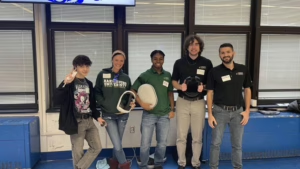
Dr. Jen Mowery (second from left) and Professor Matthew Rissler (first from right) with students at the Future Cities competition. | Dr. Jen Mowery, Harrisburg University
Build Cross-Functional Partnerships
Innovation thrives when different disciplines work together toward a shared goal. The Health Equity Summit and the Future Cities competition succeeded because they blended expertise in agriculture, sustainability, manufacturing, and digital technology. For growers, partnerships with universities, local sustainability experts, and technology vendors ensure that solutions are both practical and forward-looking.
Focus on Ease of Use
Even the most sophisticated tool will fail if it requires constant troubleshooting or extensive training. Accessible ag tech should prioritize intuitive design, mobile compatibility, and clear, actionable insights. The best solutions work for the grower rather than demanding the grower work for the solution.
For the remaining tips on making ag tech more accessible for growers, read the full article on GreenhouseGrower.com.