Grower Insights: Setbacks, Solutions, and Smart Growth
 July 23, 2025
The CEA landscape offers tremendous opportunities for innovative growers willing to learn and adapt. Success in this field demands more than just horticultural knowledge — it requires strategic thinking, marketing savvy, and a deep understanding of local food systems.
At Cultivate 2025 in Columbus, Ohio, a panel of experienced growers explored how CEA businesses can overcome common challenges and build more profitable operations. Titled “From Setbacks to Success,” the session focused on practical strategies for boosting efficiency, refining business models, and managing costs — especially in areas like automation, labor, and technology investments.
Entering the Market: A Holistic Approach
Greenhouse farming isn’t just about growing produce — it’s about carving out a space in a crowded, often competitive local food economy. Growers like Alan and Rachel Eck, who transitioned into CEA from traditional outdoor farming, learned that flexibility and community engagement are just as important as growing itself.
The couple operates Green View Hydroponics in Queen Anne’s County, Md., and grow hydroponic produce like lettuce, herbs, and leafy greens year-round, in addition to grain, broiler chickens, and hogs on their diversified farm.
Alan explained that it took about a year and a half for the couple to see success with their greenhouse business. “It was a lot of cold calls, a lot of sending letters to restaurants and schools, colleges, and wholesalers,” he said.


Their approach involved direct outreach and relationship -building within their existing networks. This hands-on marketing helped them establish trust and credibility with buyers, laying the foundation for long-term success.
Marketing: Build Relationships, Not Just a Brand
Forget flashy ad campaigns. For small-scale growers, the most effective marketing tool is a strong, personal connection with chefs, schools, and other community partners. Chefs, in particular, play a critical role — not just as customers, but as advocates for your product.
Matt Yoder, owner of Chef’s Harvest in Millersburg, Ohio, is a chef himself. He stressed how relationships with sous chefs can also be a surprising growth driver, given their tendency to move around and shift jobs. If they like the product they’re using, they’ll recommend it to other chefs when they move to a new restaurant.
The Ecks also emphasized collaboration over simple transactions. They regularly communicate with chefs about new varieties and seasonal options, tailoring their crop offerings to meet culinary needs.
At the heart of this strategy? Quality. Letting the product speak for itself is the ultimate marketing plan. “If your product doesn’t stand out from a quality perspective, you won’t be a farmer for very long,” stressed Paul Brentlinger, president and owner of CropKing, a manufacturer and distributor of commercial greenhouse structures and equipment, hydroponic systems, and growing supplies.
Rachel Eck added that their customers often comment on the freshness and longevity of their lettuce, a consistent differentiator that keeps consumers coming back.
Automation: Right-Sized Innovation
Automation doesn’t always involve expensive or cutting-edge tech. Smart growers invest in practical—sometimes surprising—tools that streamline operations and reduce labor.
“We use hoverboards,” shared Yoder, who said he’s able to operates with fewer employees thanks to the motorized personal platforms. “The person bringing the product down usually puts between 10-13 miles on that hoverboard,” he said. “It saves a lot of walking. That’s been tremendous.”
However, regarding any type of automation, Brentlinger advised growers to proceed with caution. “Some systems are completely automated, yet they’re still using the same number of employees,” he said. “Make sure the ROI is there. It’s a fad, it’s cool, but thoughtful implementation matters.”
Both Yoder and Brentlinger emphasized the idea of implementing the “right tech” in your operation — technology that fits your scale, budget, and labor model.
Crop Selection: Grow What the Market Wants
Listening to your market is crucial. Instead of growing what they prefer, successful growers tailor their crop offerings to what buyers are asking for. “If you’re going to go into this business growing what you want to grow, it’s probably not going to work,” said Yoder. “You’re going to have to grow what the customer wants to buy.”
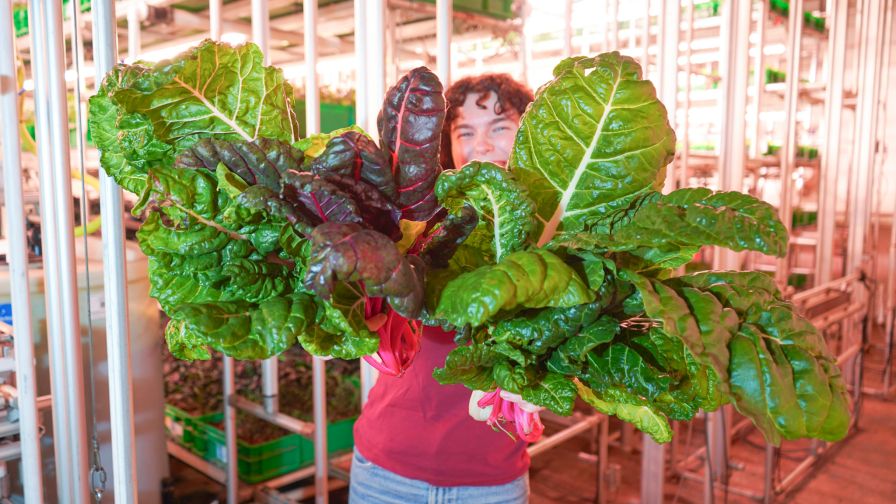
He went on to explain how Chef’s Harvest experimented with beet greens at the request of one chef, only to discover demand from a different customer.
Alan Eck also uses customer requests to guide product diversification. “Any time we add something new, usually it’s because one of our better customers is asking for it. If it works well, we start offering it to other restaurants.”
Resilience: Learning from Setbacks
All farmers face challenges. The key is learning to pivot when the unexpected happens. For the Ecks, resilience means making adjustments on the fly and staying committed through uncertainty.
For Yoder, the COVID-19 pandemic created a defining moment. Just as he expanded his operation, restaurant closures wiped out demand. “My first crop out of those three new bays was due the week our governor shut down restaurants, so I was sitting on thousands of heads of lettuce,” he said. “But three weeks later, we were searching for product because grocery demand surged.”
Brentlinger emphasized preparedness: “It’s not a matter of if, it’s a matter of when. Have a plan in place to mitigate those issues.”