A New Genetic Lens on Cucumber Performance
 March 3, 2026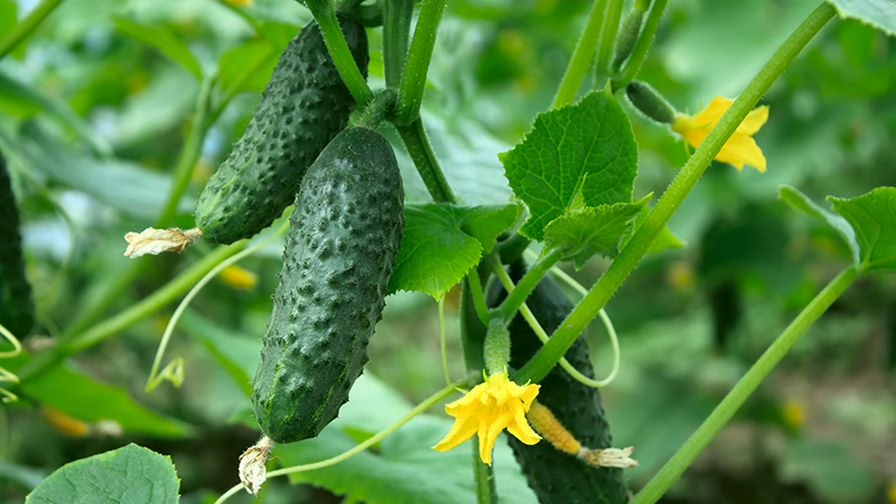
Photo courtesy of Adobe Stock
A new study published in Nature Genetics is redefining how researchers understand genetic performance in cucumbers, one of the world’s most widely produced vegetables. Led by Zhangjun Fei at the Boyce Thompson Institute (BTI), the work delivers the most comprehensive genetic map of cucumber to date and exposes previously hidden drivers of crop quality and consistency, as reported in an article on the BTI website.
Rather than relying on a single reference genome, the research team constructed a graph-based pangenome using 39 reference-level cucumber genomes. This approach revealed 171,892 large-scale structural variants, including insertions, deletions, and rearrangements of DNA that can significantly influence plant development and fruit traits such as shape and internal hollowness.
Why Structural Variants Matter More Than Single-Gene Mutations
For years, breeding efforts have focused primarily on small, single-letter genetic changes known as SNPs. The new analysis shows that while mildly harmful SNPs often accumulate over time, larger structural variants are far more likely to be purged through domestication and selection. This pattern suggests that SVs pose greater risks to plant health and performance and that ignoring them can obscure the true genetic drivers behind inconsistent outcomes.
The study also traced cucumbers’ global spread from India through Asia, Europe, and the Americas, uncovering evidence of gene flow from wild relatives into cultivated varieties.
“This is a critical insight for modern breeding,” says Fei. “It shows that when breeders bring in valuable traits from wild relatives, such as drought tolerance, they can inadvertently introduce hidden genetic baggage. Our work provides a resource to help breeders identify and remove that baggage.”



How Pangenomics Improves Prediction of Fruit Quality Traits
When researchers incorporated each accession’s structural variant “burden” into genomic prediction models, their ability to forecast traits like fruit shape and hollowness improved measurably. This finding points to a more data-driven path for selecting varieties with stronger, more reliable performance.
Beyond cucumbers, the study highlights how pangenome-based analysis can accelerate crop improvement by revealing genetic variation that directly affects quality, resilience, and production efficiency.
This research was supported by grants from the USDA National Institute of Food and Agriculture Specialty Crop Research Initiative through the CucCAP project.