The Challenge of Defining Sustainable Growing Media
 May 21, 2026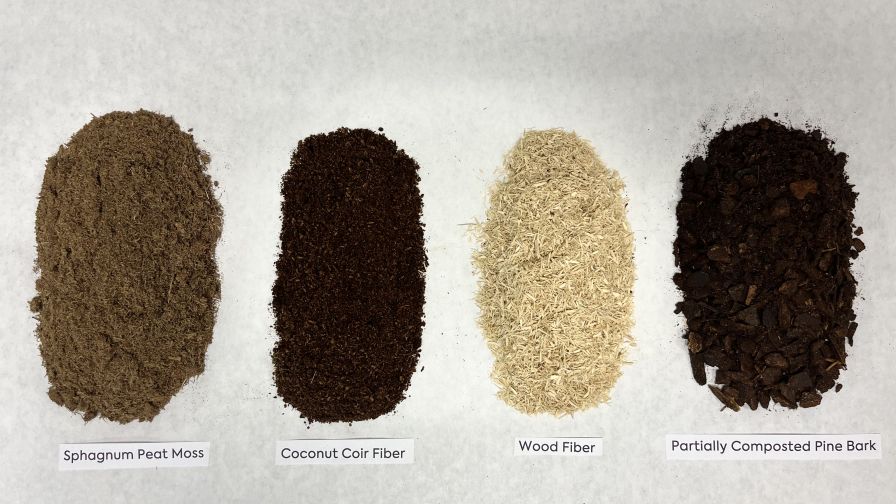
Photo: Premier Tech Growers and Consumers
The horticulture industry refers to “sustainable growing media” often, yet its meaning is nebulous and applied inconsistently, creating confusion rather than clarity in guiding green industry decisions.
A recent paper published in Frontiers in Horticulture tackles this quandary, looking to provide further insight and debate on why a single, universal definition of “sustainable growing media” has been difficult to achieve and whether it’s even possible. The authors outline eight recommendations to define minimum conditions for better categorization.
What Is “Sustainable Growing Media”?
Types of growing media include, but are not limited to, the following:
- Bark
- Biochar
- Coir
- Compost
- Mineral wool
- Peat
- Wood fiber
Previous ways of defining growing media as “sustainable” have been based on a single attribute, such as being biodegradable, recyclable, renewable, or peat-free, or aligning with certain economic, environmental, or social goals. However, the paper argues that in doing so, growing media can be classified by short-term intent rather than long-term impact. Additionally, such a method does not take into account certain trade-offs made when transitioning from one growing medium to another, such as the possibility of reduced yields. Whether or not such a product has a positive environmental impact, it is unlikely to be adopted if doing so negatively impacts production.
8 Minimum Conditions to Qualify as “Sustainable”
1. Consider all three pillars of sustainability: All claims of sustainability should address economic, environmental, and social dimensions.


2. Specify which sustainability pillar(s) are being addressed: In cases where addressing all three pillars is not possible, explicitly state which pillar is being centered.
3. Frame sustainability at the system level: Sustainability in growing media should be centered on a production system rather than individual material properties.
4. Measure impacts rather than infer them: The sustainability impacts of a growing media should be supported through measurements rather than assumptions.
5. Demonstrate functional and economic performance for the intended use: A “sustainable” growing media should be able to demonstrate reliable horticultural performance.
6. Make trade-offs and uncertainties explicit: Potential trade-offs in moving to a “sustainable” growing media should be directly acknowledged.
7. Avoid absolute or binary sustainability claims: The definition or label of “sustainable” should not be made without qualification and should be framed as comparative and conditional.
8. Use precise descriptors where evidence is limited: When a comprehensive overview of a product is not yet available, default to specific and verifiable descriptors (e.g.,“responsibly sourced”) rather than the blanket term of “sustainable.”
For additional information, you can read the full paper here.