Does Your Greenhouse Need a Retrofit or Rebuild?
 April 2, 2026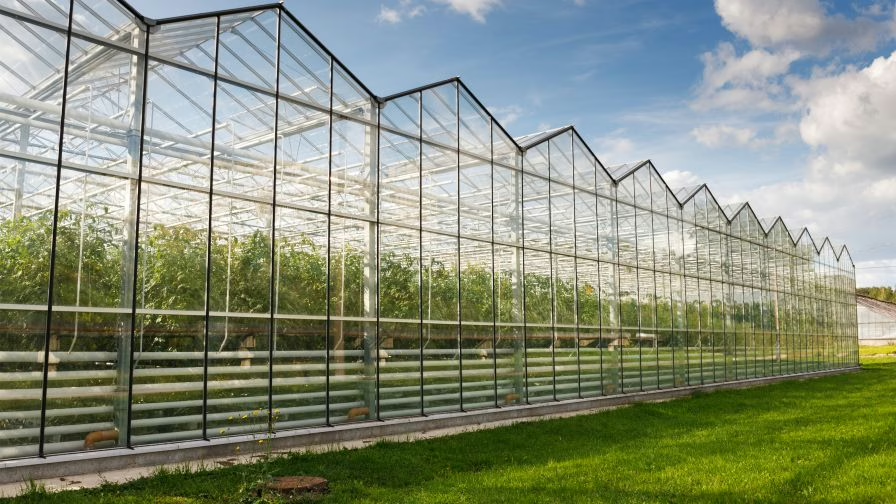
Photo: Adobe Stock
Many greenhouse operations rely on structures built decades ago. However, myriad issues, from rising energy costs to new environmental control technologies, are forcing growers to make changes. A recent blog post from Ceres Greenhouse Solutions talks about how growers can determine whether to retrofit their current facility or replace it with a new one.
Evaluate Your Current Greenhouse Structure
The first step in assessing whether you need a retrofit or a rebuild is to take a close look at your current greenhouse structure. A reliable frame and foundation will point to a retrofit as a practical option. Meanwhile, the presence of corrosion and aging materials, or a structure’s inability to support modern systems and technology, mean a rebuild makes more sense.
Common Problems Solved by Retrofits
Common greenhouse structure problems solved by retrofitting include:
- Energy costs
- Humidity issues
- Uneven temperatures
These can be done by addressing and upgrading environmental controls, glazing, heating systems, and ventilation, leading to improved crop consistency and reduced operational expenses.
Signs that Point to a Rebuild
A rebuild is preferable, and more cost-effective on a long-term basis, when the problems can’t be solved by (or don’t allow for) upgraded systems. Beyond severe structural damage, greenhouse design limitations are the main culprit.



One prominent example is when an older greenhouse structure has a low roof height, limiting airflow. No amount of new or upgraded technology is enough to circumvent this design hurdle, the Ceres article says.
However, every greenhouse project is different, with varying budgets, production needs, and long-term goals. Growers should evaluate their current structure thoroughly and consider all their options to ensure that their investment in their greenhouse delivers.