How to Prevent Fertilizer Compatibility Problems in CEA
 March 19, 2026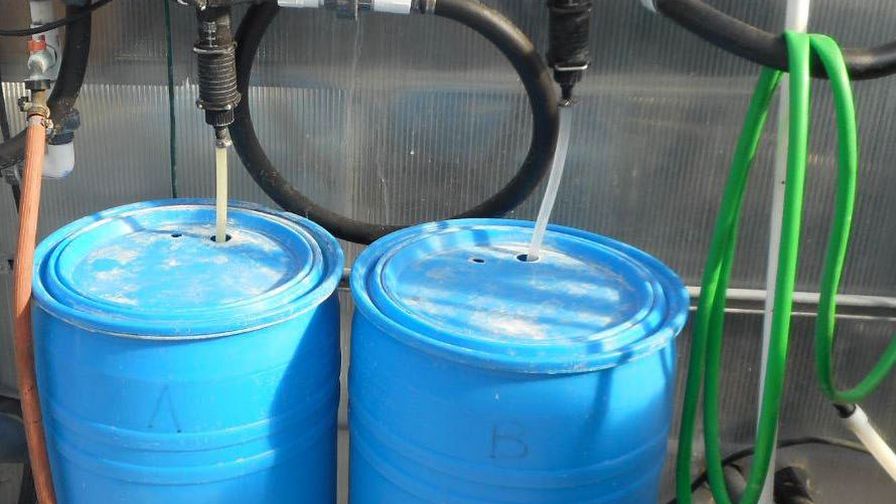
Two fertilizer injectors, each with a concentrated stock tank, connected in series to dispense a 2-part fertilizer. | Neil Mattson, Cornell University
An article from the March 2026 e-GRO Alert (produced by a consortium of university extension specialists) explains how fertilizer compatibility can become a critical operational issue in CEA, particularly when growers mix highly concentrated stock solutions used in fertigation systems.
As described by Cornell University greenhouse researcher Neil Mattson, fertilizers are typically prepared in stock tanks at concentrations up to 100 times stronger than what plants ultimately receive through injector systems. This allows growers to efficiently deliver nutrients, but it also increases the risk of chemical reactions between incompatible salts.
When incompatible fertilizers are combined, they can form insoluble precipitates, which are often visible as cloudiness or sludge. This process permanently locks up nutrients and can clog irrigation lines or injector equipment, creating both crop nutrition issues and costly system maintenance problems.
Three Ways Growers Can Check Compatibility
The article outlines three practical methods CEA growers can use before mixing fertilizers:
1. Consult Suppliers or Extension Specialists
Fertilizer manufacturers and extension experts can quickly confirm compatibility between products. Because fertilizers with the same nitrogen-phosphorus-potassium (N-P-K) ratio may contain different salts depending on the manufacturer, providing the exact product label is important.



2. Review Fertilizer Labels and Compatibility Tables
Labels list the salts used in each product, which can be compared against compatibility charts. For example, calcium nitrate, commonly used in food-crop production, is incompatible with fertilizers containing phosphates or sulfates, meaning they must be stored in separate stock tanks.
3. Perform a Jar Test
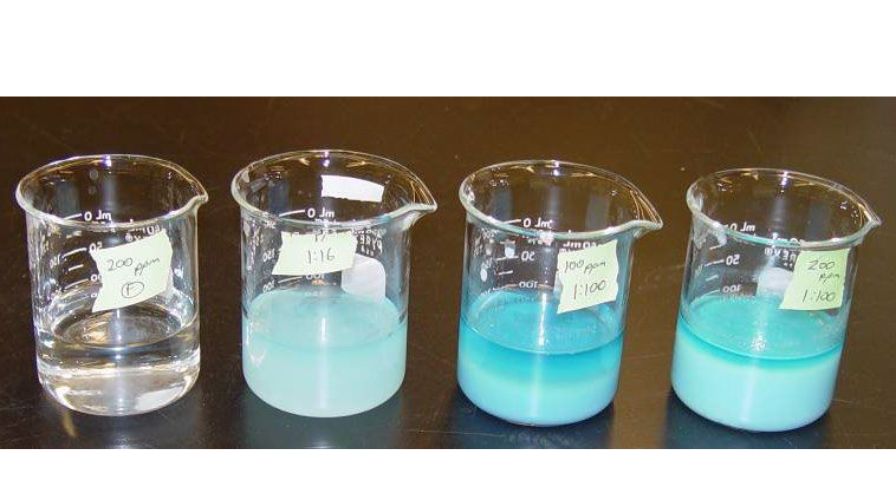
Testing compatibility of 2 different fertilizers using the jar test. The left photos represent the fertilizers mixed at the dilute concentration received by plants (200 ppm N), the subsequent photos L to R represent the two fertilizers mixed at 16x, 100x, and 200x concentration showing they are incompatible in the same stock tank. | Neil Mattson, Cornell University
Growers can mix fertilizers in a small jar at stock-solution concentration and observe the mixture for 12 to 24 hours. Cloudiness or precipitation indicates incompatibility before a full batch is prepared.
Preventing Problems Before They Start
Ultimately, the guidance emphasizes prevention. Once incompatible fertilizers form precipitates, the reaction cannot be reversed, leading to wasted inputs and potential irrigation failures. As the authors note, verifying compatibility before mixing is a simple step that can protect both crop nutrition and fertigation infrastructure.
You can find the full article by clicking here.