Tabletop 101: A Beginner’s Guide to Elevated Growing Systems

 December 8, 2025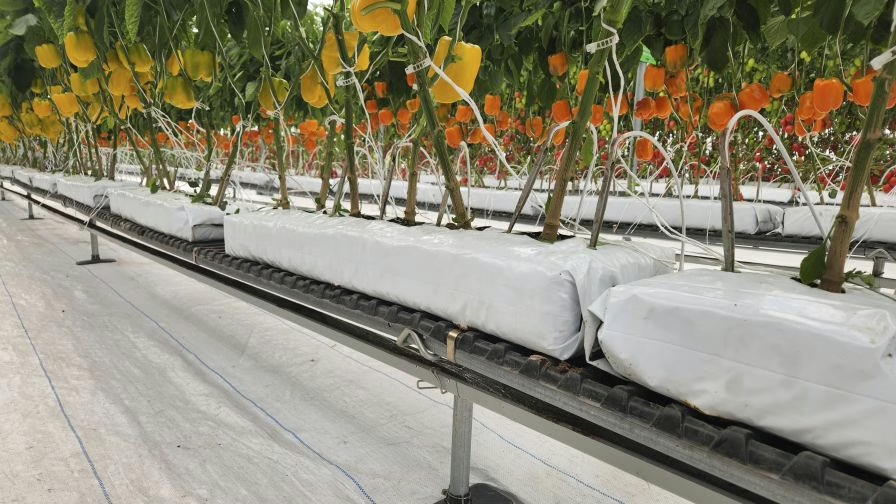
Lower-elevation tabletop systems are common in peppers. The rootzone is raised above the floor, fruit hangs clean beneath the canopy, and cultural work—pruning, scouting, defoliation—occurs at a manageable height. | Israel Holby, PlantLogic
Strawberries, peppers, tomatoes, and cucumbers all share one trait: They produce continuously over many weeks. They require pruning, training, scouting, and harvesting in repeating cycles. When these tasks happen at the floor level, fatigue slows them down. When the rootzone is raised to waist or chest height, the rhythm of the work changes.
Tabletop systems are not a replacement for other methods; they’re one of several ways to organize a fruiting crop. Their value emerges when growers understand how the physical environment they create influences the biological and operational realities of a season.
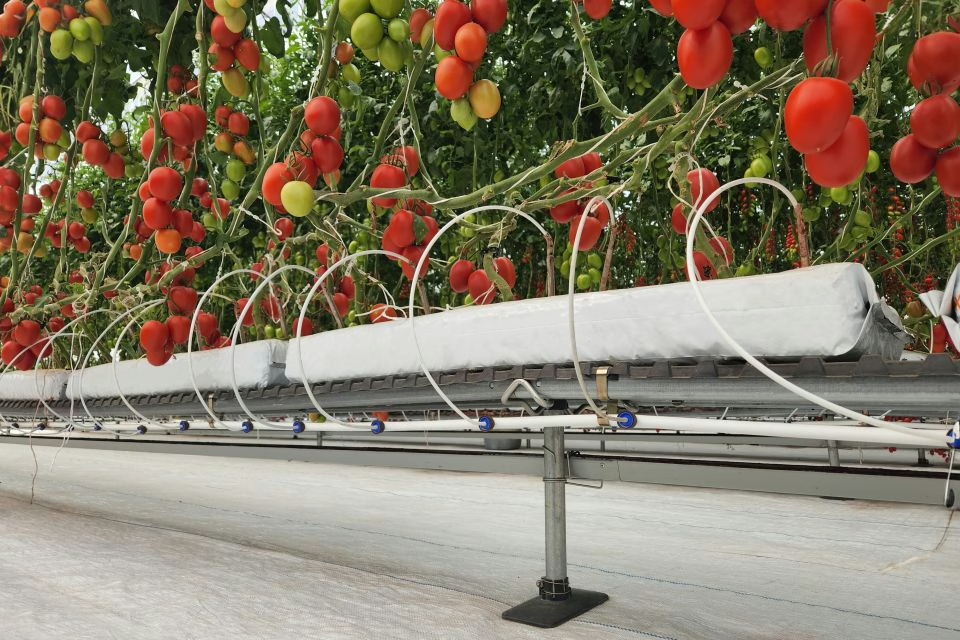
Tomatoes respond well to elevated growing lines. Clusters develop progressively over weeks, and workers can prune, tuck, and harvest without crouching or working around floor-level mats. | Israel Holby, PlantLogic
Raising the Crop Above the Floor
Most growers who turn to tabletop systems are not replacing older gutter systems. Many come from field production, growbag-on-ground setups, gravel floors, or simple metal benches. In those formats, cropping works until the canopy matures. Containers trap humidity at their base. Condensation lingers. Irrigation runoff collects in patches, and airflow beneath leaves is unpredictable. None of these challenges are catastrophic on day one, but they accumulate across weeks.
Elevation changes those conditions. Air can move beneath the crop instead of stalling against surfaces. Moisture follows a defined path. Workers don’t have to bend around obstacles to reach plants.

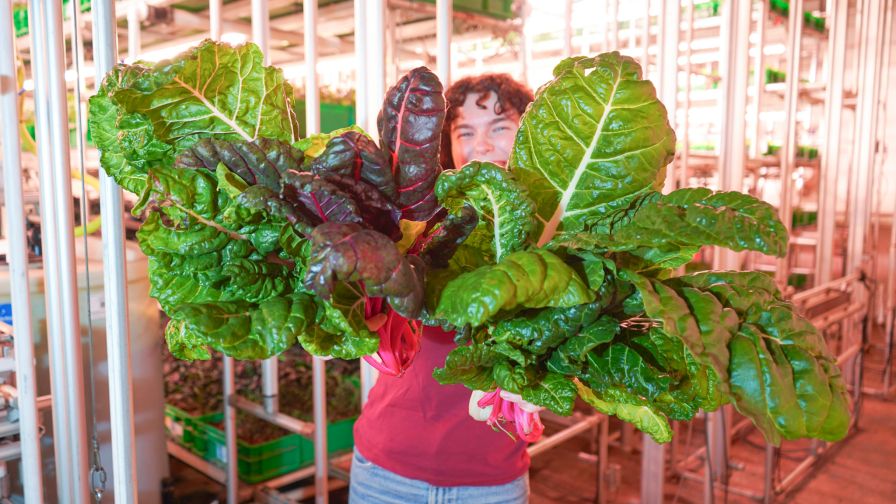

Tabletop systems don’t make horticulture simpler, but they can make cultural work more intentional. They reduce unplanned interactions between roots, moisture, and ground-level microclimates, giving growers the ability to see their crops rather than work around them.
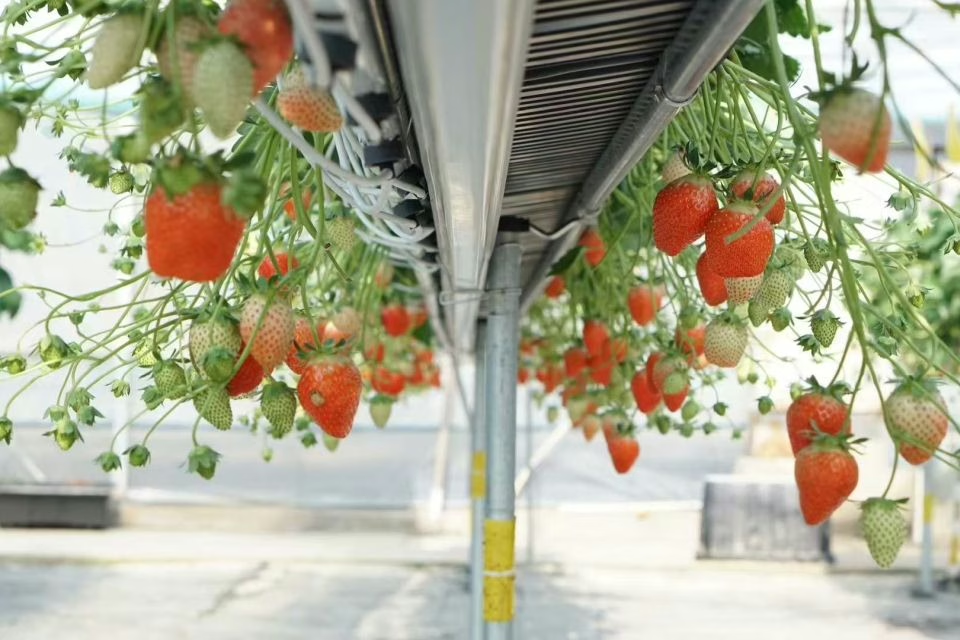
When berries hang beneath the trough, harvest becomes an upright action. Workers see ripeness immediately, remove damaged fruit quickly, and maintain quality throughout the cycle. | Israel Holby, PlantLogic
The Rootzone in Its Own Environment
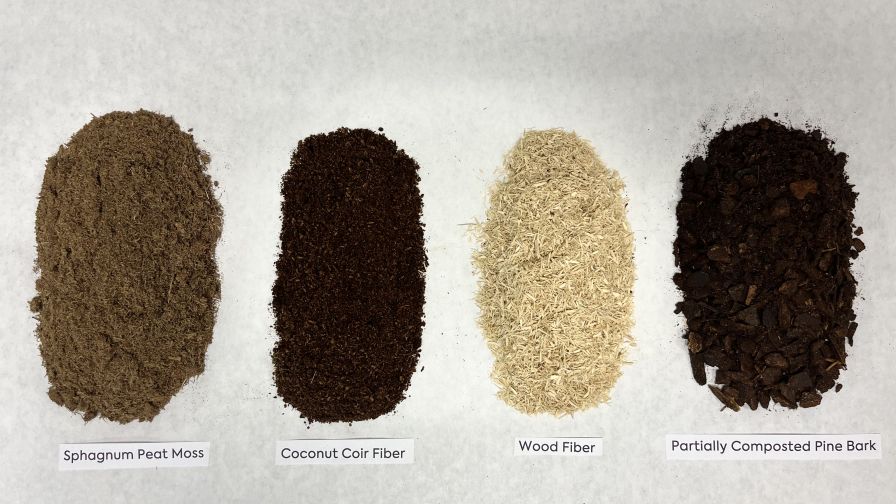
At the center of a tabletop system is the structure that carries the substrate. This will either be a pre-filled grow bag or slab, or loose-fill hard containers, such as pots that the grower fills themselves.
Pre-filled grow bags and slabs offer a defined starting point. The substrate arrives blended and packed to a consistent specification, so growers don’t need to mix or handle media during installation. Once hydrated, the bags are ready to plant. Rows install quickly, spacing is uniform, and turnover between crops is straightforward. Although the media will naturally evolve during the cycle as roots expand and irrigation interacts with it, the initial conditions are standardized. For operations that value a quick start, reduced preparation, or fewer early-stage decisions, this format is practical.
Fill-it-yourself troughs offer flexibility and long-term cost savings. They allow growers to tailor substrate blend or formulation to crop demand or seasonal conditions. A long-season pepper may favor deeper media to buffer irrigation pulses. A winter strawberry cultivar may perform better in a lighter mix with faster drainage. The infrastructure doesn’t change — only how the substrate within it is managed.
Drainage, Feedback, and Why Direction Matters
When the substrate sits in a gutter or trough, water movement is no longer incidental. Irrigation moves through the rootzone and follows a defined path — usually to a single discharge point or controlled collection line.
This predictability gives growers low-friction feedback. A change in runoff volume after a hot afternoon or a heavier drain during fruit set tells a grower something about substrate behavior and plant demand. With a tabletop system, drainage reflects how the rootzone interacts with irrigation long before sensors or analytics enter the equation.
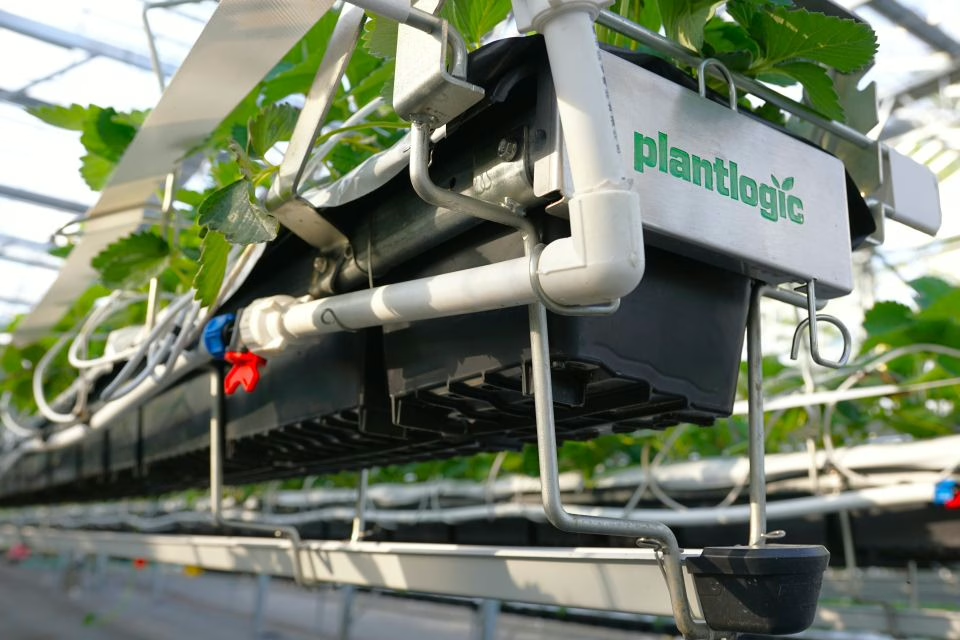
Rather than pooling across floors or mats, excess irrigation follows a controlled path under the gutter. Many growers use this single outlet to monitor how the substrate is performing from one day to the next. | Israel Holby, PlantLogic
Two Ways to Support a Tabletop System
Elevated systems are held in space either by ground-supported frames or overhead suspension. Both aim to place the rootzone at a workable height; the difference lies in how the greenhouse around them functions.
Ground-supported structures use legs or posts to lift gutters into position. Weight is distributed downward, height adjustments are practical, and integration into existing greenhouses is straightforward. Heavier containers or larger substrate volumes — common in tomatoes, cucumbers, and peppers — pair naturally with this format.
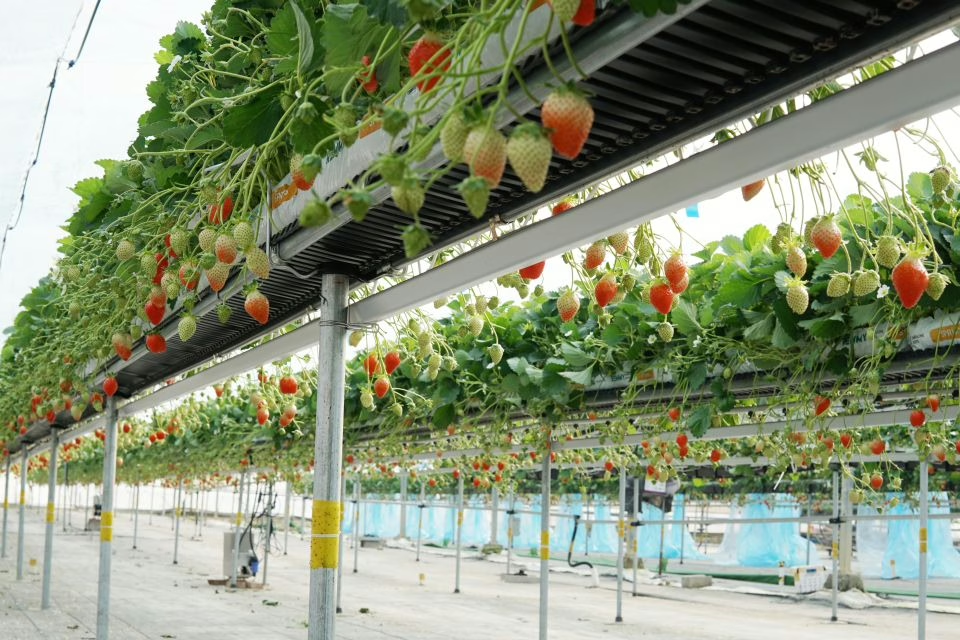
Ground-supported tabletop structures lift the rootzone to working height while distributing weight through posts. This approach integrates easily into existing facilities and accommodates heavier substrate volumes. | Israel Holby, PlantLogic
Hanging systems suspend troughs or gutters from greenhouse frames. They remove obstacles from the floor, simplify sanitation, and allow carts or equipment to pass beneath. Some strawberry operations prefer this approach because it allows for row spacing to be adjusted, such as opening or closing the aisles.
Which you choose depends on greenhouse geometry and strength, desired variability, threat of ground heaving, cost/benefit analysis, retrofit constraints, and how maintenance will occur over a full cycle.
Labor as an Agronomic Input
Tabletop systems are sometimes described as ergonomic. In practice, their influence reaches further than posture. When workers interact with the crop at a comfortable reach, their attention remains on the plant rather than on the mechanics of accessing it. Scouting, deleafing, tucking, cluster cleaning, and harvesting occur within a natural line of vision. Tasks become decisions about biology, not navigation.
Tabletop systems don’t eliminate labor, but they do help structure it. They allow cultural tasks to be carried out at a consistent standard across long crop cycles. For fruiting crops that express development over many months, that consistency becomes its own form of stability.
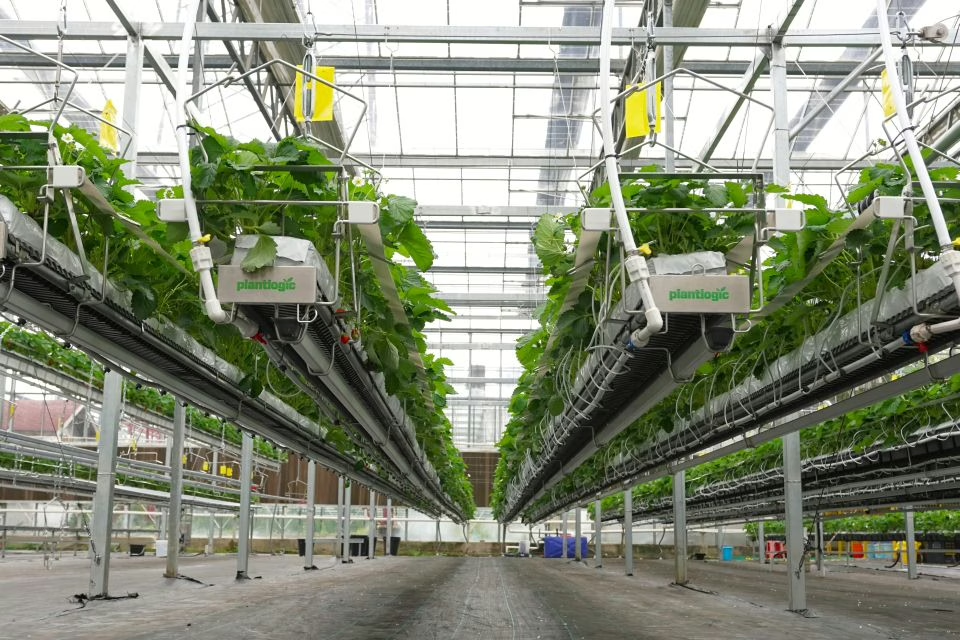
Hanging tabletop gutters support lay-flat grow bags at a consistent height. The elevated rootzone helps keep fruit clean, improves worker access, and reduces floor-level humidity around the substrate. | Israel Holby, PlantLogic
Long-Term Stability, Not Short-Term Convenience
CEA systems rarely succeed or fail in week two. The real test emerges when roots mature, substrate behavior shifts, canopy density increases, and irrigation cycles intensify. At that stage, growers don’t ask whether a system looked organized during installation — they ask whether it remains functional under the full pressure of fruiting, pruning, and environmental changes.
The tabletop system is designed to be lived in. Over time, growers adapt their approach, experimenting with substrate type, emitter spacing, pulse timing, or cultivar behavior. Because the physical layout is stable, those experiments can be interpreted clearly. Outcomes are not drowned in variables hidden beneath bench plastic or floor-level humidity pockets.
A Practical Way to Begin
Very few growers adopt tabletop systems overnight. Most begin with a bay or a handful of rows. They plant a familiar cultivar, observe how irrigation behaves, watch airflow beneath the canopy, and notice how naturally workers engage the crop. Those observations accumulate into decisions, with adjustments that reflect the facility, climate, and the team running it.
In an industry shaped by technology, it is easy to overlook the influence of physical design. Yet some of the most meaningful gains in CEA arise not from what we add, but from how we arrange the space the crop lives in. Tabletop systems simply change the position of the rootzone and the vantage point of the grower. That change, when executed thoughtfully, can reshape the season.