Research Brief: High Tunnel Tracking
 November 11, 2025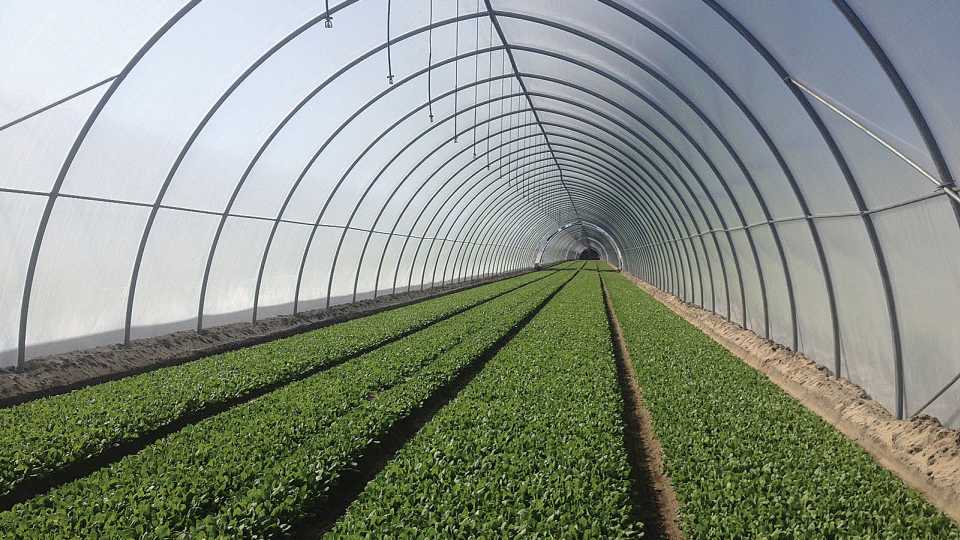
Tracking weather data around high tunnels has potential to help growers create optimal growing conditions for their crops with minimal effort, according to research in progress from Ohio State University (OSU). Says Matt Kleinhenz, Ph.D., professor of horticulture, who leads the study: “We are trying to take some of the guesswork, risk, time, true cost, and effort out of high tunnel growing.”
Undergraduate students perform their research on eight high tunnels at OSU’s Wooster, Ohio, campus and on farms of cooperating growers. Six of the tunnels run north to south and two run east to west. Using a HOBO data logger, the researchers document the weather conditions outside each tunnel and determine how they affect the growing conditions inside the tunnel. With that data, they can determine when a grower needs to open or close the tunnel before the weather changes.
“The data become two decision-making and educational dashboards for growers, educators, and others,” Dr. Kleinhenz says. “One dashboard allows users to see conditions, including ventilation statuses, in real time. The other allows them to quickly filter the data to select ventilation statuses given weather conditions and target temperatures for their crops.”
The data logger provides growers with a historical record of all the weather conditions the research team has recorded, along with the ventilation requirements needed to create a specific growing environment inside.
“Let’s say I want my north-south or east-west tunnel at 65 degrees Fahrenheit on a 55-degree day that’s partly cloudy with wind coming in 10 mph from the north,” he says. “The data will give me the ventilation statuses needed to create a 65-degree tunnel.”


To make the grower’s work even more streamlined, the researchers have developed a remote control system that works with high tunnels. With the remote, growers don’t have to be physically present to manually open and close their tunnels as long as they have a network connection.
“Growers have a different perspective on high tunnel environmental management when they don’t need to be there,” Dr. Kleinhenz explains. “With a remote, they can just open or close the tunnel with their phone. Otherwise, they have to hope they can make it back to the tunnel before the wind blows too hard or it starts to rain.”
With the data they’ve collected and the tools they’ve developed so far, the researchers are confident they’re on the right track to advancing high tunnel growing while making it less demanding and risky.
“High tunnels are considered simple, low-tech structures in the CEA realm,” he says. “But we’re learning that more can be accomplished with them than previously thought. Easier and more effective environmental management is key to unlocking some of that additional potential.”
Editor’s note: This article was originally published in our Industry Report: Protected Crops.