2025 Visionary Grower Finalist: Renato Zardo, Great Lakes Growers
 October 21, 2025
Renato Zardo is one of three finalists in the Visionary Grower category of the inaugural CEAg World Impact Awards.
 Renato Zardo of Great Lakes Growers in Burton, Ohio, is one of three finalists in the Visionary Grower category of the inaugural CEAg World Impact Awards. The Visionary Grower Award honors an individual who has made a transformative impact on their own CEA operation, leading to remarkable gains in yield, resource efficiency, and/or profitability. The individual’s contributions to land stewardship, resource conservation, environmental preservation, and/or food security will also be considered.
Learn more about Zardo below, and watch CEAgWorld.com for more profiles of our finalists.
Renato Zardo has earned a reputation for testing new technology in the greenhouse, a fact that’s helped him thrive in his work as director of growing for Great Lakes Growers in Burton, Ohio.
“So many growers think that tech doesn’t work in agriculture,” he says. “But the only reason it doesn’t work is because they aren’t willing to adapt to the new technology.”
Zardo isn’t afraid of diving headfirst into the unknown. Growing up in Brazil, he grew row crops such as wheat, corn, and soybeans in the field. When he first moved to the U.S. in 2008 to start his career at Green Circle Growers, a greenhouse floriculture operation in Oberlin, Ohio, he had never stepped foot in a greenhouse.

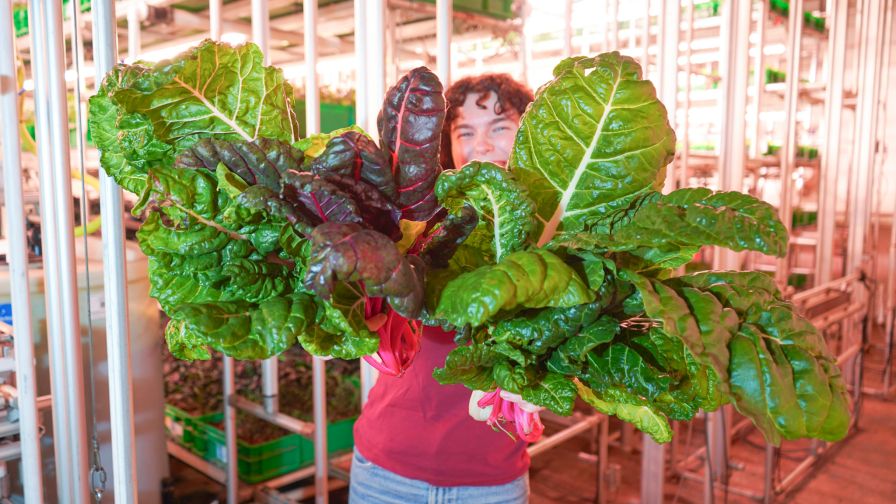

“I was mesmerized,” he says. Being in the driver’s seat, controlling the main factors that drove his crops, hooked his interest. “Going from growing in the field to a greenhouse was fascinating.”
Zardo’s career progressed into produce when he became a grower for greenhouse tomato producer Nature Fresh Farms. He later joined biological control company Koppert as a consultant before landing at Great Lakes Growers, where he now oversees the lettuce and herbs division.
Working Directly with Suppliers
Since joining the Great Lakes Growers team almost four years ago, Zardo has been instrumental in the company’s adoption of high-efficiency LED lights, precision climate control, and data-driven crop management to grow high-quality greens and herbs throughout the year.
Suppliers regularly ask Zardo about testing their technology in his facility. He says he’s approached frequently at industry events and receives at least two emails from tech suppliers every week about starting a new trial. When evaluating which tech to test, he pays particular attention to ROI potential.
“Consumers will only pay so much for a head of lettuce,” he says. “I will only invest in products that I think will make my greenhouse better. At the end of the day, it doesn’t matter if I use a high-tech piece of equipment or a sustainable method to grow my crops if I can’t sell them.”
Zardo’s experienced, practical insights have made him an invaluable resource for these companies while simultaneously improving operations at Great Lakes Growers. For example, ag tech company Leaficient approached Zardo in 2023 to trial a camera system for plant monitoring. His feedback made a world of difference.
“I don’t need to see pictures of my crops when I already walk through my greenhouse every day,” Zardo told the company. “Growers want to see how their plants respond to their environment in real time. The major thing I can’t see on camera is photosynthesis—but if I can figure out what makes my plant shut down the moment it happens, I can ensure linear growth throughout the day.”
Leaficient went back to the drawing board and developed a real-time photosynthesis camera that officially hit the market in 2023. Using the system at Great Lakes Growers, Zardo started producing plants that are 15% larger.
“The cameras help me avoid plant stress because they tell me when I need to change my light recipe, add more light, or take light away,” he says. “The less stressed your plants are, the more yield you get.”
Setting Realistic Expectations
Zardo admits that trialing a new piece of tech isn’t always worthwhile. “It’s my job to figure out how to make [ag tech] work in the greenhouse,” he says. “But you can’t be stubborn. If something’s not going to work, you have to move on to something else.”
Oftentimes, he continues, greenhouse operators get hung up on becoming the first facility to use a breakthrough piece of technology. As exciting as that prospect may be, it’s important for growers to remember their operation’s core mission.
“We’re a dedicated greenhouse facility, not a trial facility,” he explains. “We need to grow and we need to make a profit. We have 30 workers relying on us to be profitable so we can continue to pay them. At the end of the day, you have to keep in mind that your job is growing produce.”
Zardo aims to expand Great Lakes Growers’ growing area and increase its yield; demand for lettuce in 2025 has been higher than what they can supply every week. He also plans to continue to test and apply new innovations to help his operations—and other growers—be more efficient.
“Growing productivity and my people are what really drive me,” he says. “I want to acknowledge the new products that are out there on a small scale, but only if I think there’s a place for them.”
The winners of the CEAg Impact Awards will be announced and honored live on stage at the kickoff ceremony for the CEAg World Conference and Expo on Nov. 20, 2025, in Durham, N.C. To learn more and join us at the conference (growers attend free if registered by Oct. 31), visit CEAgWorld.com/events.