Succession Planning: 8 Ways You Can Prepare Your Greenhouse for What’s Next
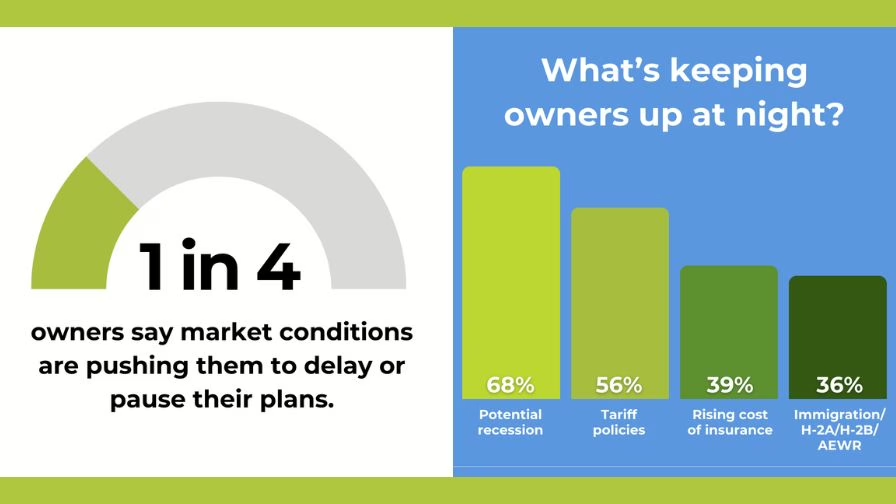
Chart and graph stats from the 2025 State of Succession and Exit Planning in the Horticulture Industry Report. | PivotPoint Business Solutions
In horticulture, we live by the seasons. We know when to plant, when to fertilize, and when to ship. Business ownership isn’t all that different. There’s a rhythm to it — a cycle. And just like the seasons shift, so too must ownership.
A Season of Change: What Succession Can Teach Us About Business Cycles
Succession planning isn’t a disruption. It’s a natural part of the business lifecycle. However, unlike the weather, it doesn’t come on a predictable schedule. That’s why planning matters.
This year, PivotPoint Business Solutions conducted our second annual “State of Succession and Exit Planning in the Horticulture Industry” survey, in partnership with Greenhouse Grower Magazine, BEST Human Capital and Advisory Group, Advanced Grower Solutions, and Hathaway and Lane Direct. We unveiled the results at Cultivate’25, and they reveal a landscape in transition — one where owners are beginning to prepare for their next season, even as external pressures reshape their timelines.
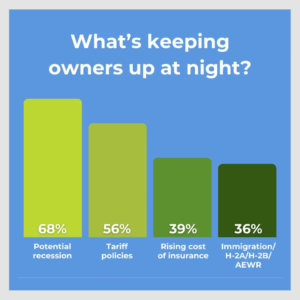
2025 Survey Stat Pulse. | PivotPoint Business Solutions
Storm Clouds and Shifting Timelines
Just as a sudden plant disease can delay or ruin a crop, economic and political uncertainty is causing many owners to rethink their exit plans. The top concerns this year were:




- A potential recession (68%)
- Tariff policies (56%)
- Rising insurance costs (39%)
- Immigration and the Adverse Effect Wage Rate (36%)
These aren’t just background noise — they’re reshaping the horizon. 1 in 4 owners have changed their planned exit timeline, and 12% have delayed it by five or more years. Interestingly, Baby Boomers — who might be expected to lead the way into retirement — were the most likely to push their exits further into the future.
Signs of Growth: Owners are Preparing
Despite the challenges, there’s good news. Like a crop of pansies in spring, we’re seeing signs of readiness and renewal:
- Business readiness to transition increased by 67%. Key drivers of business readiness include a strong key management team, reliable systems, clearly defined processes, a clear growth strategy, and minimizing reliance on the owner.
- Personal readiness more than doubled (from 4% to still only 9%). The message is starting to get through that you need to have something to aim for instead of just leaving. It is a real issue and one of the key reasons we emphasize personal readiness.
- More owners are involving successors and key managers (up from 6.5% to 14%). It is essential to limit risk and be prepared for these discussions and the questions your people will have.
- Customer satisfaction tracking is improving (up from 6.5% to 12%). With a reduced reliance on verbal feedback and increased use of written or online surveys.
- Owners are taking more time off (vacation rates rose from 15% to 28%). Owners who have never taken a vacation dipped 9%. This is a positive, as we all have to clear our heads. These improvements suggest growing trust in team leadership and a healthier owner mindset.
Preparing for the Next Season: Eight Actions Owners Can Take Today
Just as no grower would wait until planting to purchase their substrates, business owners shouldn’t wait for a crisis — or a buyer — to start planning their transition. Half of all exits happen unexpectedly, triggered by what we call the 5 Ds:
- Death
- Disability
- Divorce
- Disagreement
- Distress
The good news? You don’t need to overhaul everything overnight. These eight actions are like seasonal maintenance — small, intentional steps that build resilience and value over time.
1. Know What Your Business Is Worth
Think of it as your crop scheduling. You wouldn’t plant without knowing how long a variety takes to be ready for customers. A business valuation gives you a baseline and helps you plan for growth, sale, or succession with clarity.
2. Separate Yourself from the Business
Owner-centric businesses are like relying on a single customer — vulnerable and hard to scale — a real value killer. Build a team that can thrive without you. Delegate, empower, and create systems that run smoothly with or without you. The more a business can run independently, the more valuable and resilient it becomes.
3. Build Your Advisor Bench
Just as growers rely on educated horticulturists, suppliers, and plant trials, owners need a strong advisory team. A Certified Exit Planning Advisory (CEPA) can help coordinate your accountant, attorney, and financial advisor to align your personal, financial, and business goals. We are seeing the increasing importance of value building and having a Value Building Advisor as part of your advisor team as well (a CEPA is also trained to assist in this).
4. Understand Your Customers Deeply
Gut instinct is valuable, but data is better. Use surveys, loyalty programs, and digital tools to track satisfaction and trends. These insights not only improve operations — they boost buyer confidence. While we saw those measuring customer satisfaction improve, at 12% it is much below where it should be — these numbers have value to potential buyers. Also, diversify your revenue base and monitor customer concentration to reduce risk and increase value.
For the remaining four actions, read the full article on GreenhouseGrower.com.