Research Brief: Resource Use Efficiency in Greenhouse Environments
 July 29, 2025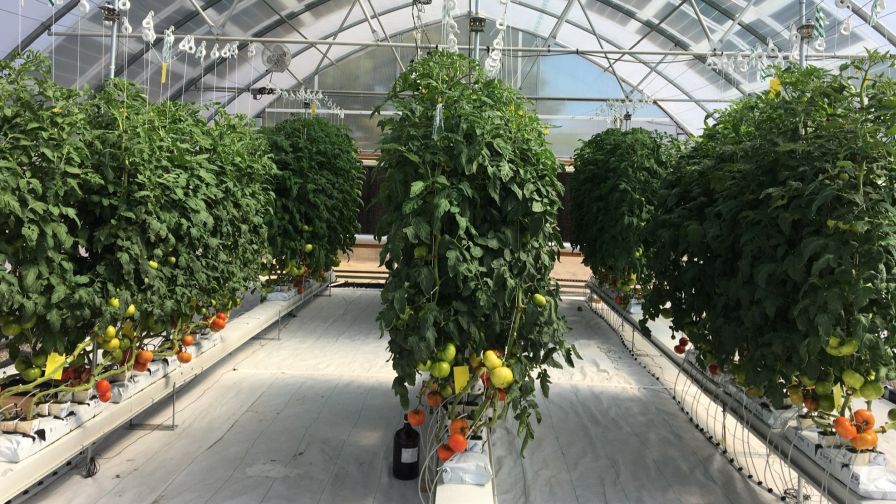
Photo: The University of Arizona
Recent research at The University of Arizona (U of A) focused on wavelength selective coverings for greenhouse operations. Considering Arizona receives more than 300 days of sunshine per year, greenhouse producers in the area must balance excess sunlight with how much water and electrical energy they use. Researchers at U of A aimed to address this imbalance in a recent study led by Murat Kacira, Ph.D., director of the Controlled Environment Agriculture Center (CEAC).
“Wavelength selective and energy generating coverings give us the opportunity to control a variety of light spectrums entering the greenhouse,” he says. “They also give us the ability to reduce energy use and offer potential savings for water consumption for plant production.”
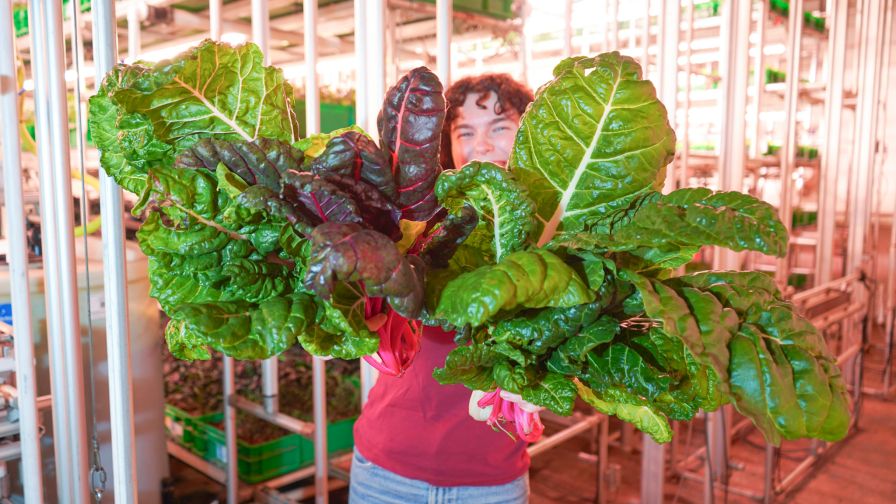
Some crops require low light levels (leafy greens) while others require high light levels (tomatoes, cucumbers, and strawberries) to achieve optimal growth, Dr. Kacira explains. With this in mind, he set one primary goal for the study: To determine which greenhouse coverings ensure leafy greens and fruiting crops receive sufficient amounts of sunlight while conserving other resources.
To reach this objective, researchers focused on the different environments wavelength selective coverings (ranging from opaque to semi-transparent) created in the greenhouse. “Each covering created a different environment in terms of light intensities, light quality spectrum, and air temperature,” Dr. Kacira says.
Researchers paid close attention to how quickly the plants grew and how yields were affected by each covering – they also monitored the amount of electrical energy and water the plants needed. While some coverings lowered the yield outcome for some plants, Dr. Kacira explains, growers may find it worthwhile from a resource efficiency standpoint.



“To a certain extent, reduced yields are acceptable if we’re saving resources significantly,” he says. “Reducing the amount of water and electrical energy used can make the resource efficiency metric attractive to some growers.”
While researchers found their initial results promising, more work needs to be done on wavelength selective coverings before they can be used in commercial greenhouse production. “There are a lot of exciting opportunities here, but some R&D questions still need answers before growers start using these coverings in their facility,” Dr. Kacira advises.
This article is a part of CEAg World’s Industry Report: Greenhouse Produce. Download the full report here: https://stage.ceagworld.com/industry-reports/.